Loading...
Dairy Processing in Surrey, British Columbia
Industrial Wastewater Canada sizes and supplies dairy processing for plants in Surrey, British Columbia. Local demand is driven by food processing, wood products, metal fabrication, agritech, discharging under Surrey's sewer-use rules toward Fraser River. Quote requests with flow rate and effluent type get a sized proposal.
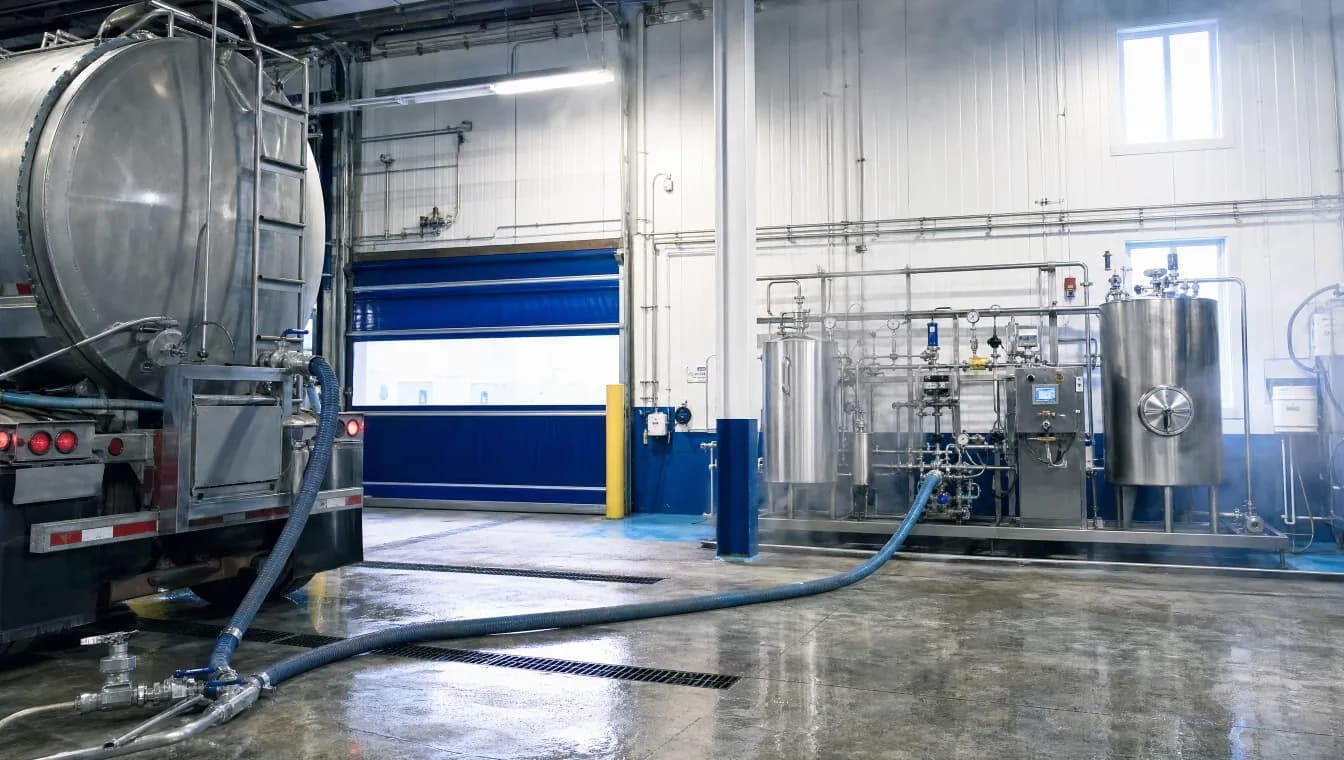
Ask any dairy plant operator what drives their effluent problem and the answer is usually the same: whey, wash water and clean-in-place chemistry. Milk solids are almost pure BOD. A single tanker of spilled or off-spec milk can hit a treatment system harder than a full day of normal production. Add caustic and acid CIP cycles that swing pH from 2 to 12 within hours, and dairy wastewater treatment becomes as much about equalization and control as it is about removal.
Cheese and yogurt carry the sharpest loads
Cheese and yogurt operations face the sharpest loads. Whey carries lactose and protein at concentrations that municipal plants will not accept without heavy surcharges, and many Canadian municipalities now meter overstrength discharge closely enough that the fees show up as a separate line on the utility bill. Fluid-milk plants run lighter but more variable, with load following the packaging schedule rather than a steady curve.
The equipment response
The equipment response follows the problem. An equalization tank with pH correction comes first, sized to absorb both the CIP swings and the occasional dumped batch. Dissolved air flotation removes fat and protein solids after chemical conditioning; for dairies this stage alone often brings the discharge back under bylaw limits. Where a plant discharges to a lagoon or a small rural sewer, a moving bed biofilm reactor adds biological polishing in a compact footprint that fits inside an existing building. The float and biological sludge dewater well on a screw press, and several of our dairy customers send the pressed cake to local farms.
Quoted from your data
Every dairy is different in ratio even when the ingredients are the same, so we quote from data. A week of flow logging, a composite sample analyzed for BOD, TSS, FOG and pH, and a copy of your discharge agreement are enough for us to size the tanks, the DAF and the dewatering equipment and give you a firm budget. If your plant is remote, the same treatment train can arrive as a containerized package that needs only power, a pad and pipe connections. One caution from experience: undersized equalization is the most common failure we see in dairy retrofits, because the tank was sized for average flow while the CIP schedule delivers the load in two or three daily pulses that the average never shows.
Surrey holds the fastest-growing industrial land base in British Columbia. As Vancouver's older districts run out of room, food processors, wood-products plants, metal fabricators and agritech operations keep landing in Campbell Heights, Port Kells and Newton, bringing the city past 568,000 residents. Every significant discharger connects to Metro Vancouver's system under GVS&DD Bylaw 299 and its waste discharge permits, with the Fraser River as the ultimate receiving water. Fastest-growing BC industrial land base; GVS&DD Bylaw 299 permits. That is the regulatory backdrop for dairy Processing in Surrey: equipment gets sized against the local limits on the route to Fraser River, not against a national average.
Location
Surrey, British Columbia
Population 568K
Receiving Water
Fraser River
Pricing
Sized & quoted per project
What's Included in Surrey
Sizing against Surrey's sewer-use and surcharge regime (fastest-growing BC industrial land base; GVS&DD Bylaw 299 permits)
Support for direct-discharge projects requiring a waste discharge authorization under British Columbia's Environmental Management Act
Effluent characterization matched to Surrey's dominant dischargers: food processing, wood products, metal fabrication, agritech
Discharge route review for systems releasing toward Fraser River
Dairy Processing on the ground in Surrey
Surrey's new industrial parks mean most plants are getting their first Metro Vancouver discharge permit, and wastewater pretreatment designed into the greenfield build costs a fraction of the retrofit. In Surrey, the plants asking about dairy Processing are mostly in food processing, wood products, metal fabrication and agritech, and each of those sectors puts a different load on a treatment train. Fastest-growing BC industrial land base; GVS&DD Bylaw 299 permits. Direct discharge toward Fraser River instead requires a waste discharge authorization under British Columbia's Environmental Management Act. Surrey is big enough that the sewer utility samples industrial connections routinely, so an out-of-spec effluent gets noticed within a billing cycle. Projects in Surrey tend to be one-of-a-kind rather than repeat configurations, which is exactly the case where sizing from measured effluent data matters most.
FAQ
Frequently Asked Questions
Everything you need to know about our services.
Do you supply dairy Processing in Surrey?
Yes. Industrial Wastewater Canada sizes and supplies dairy Processing for plants across Surrey and the surrounding region. Most local demand comes from food processing, wood products, metal fabrication, agritech. Send a quote request with your flow rate and effluent type and a sized proposal follows.
What discharge rules apply to industrial wastewater in Surrey?
Fastest-growing BC industrial land base; GVS&DD Bylaw 299 permits. New buildings, first permits What distinguishes Surrey is how many plants are getting their first permit rather than renewing an old one. A processor moving from a grandfathered Vancouver site into a new Campbell Heights building discovers that Metro Vancouver wants characterization data and a pretreatment plan before start-up, not after the first violation. Plants discharging to the municipal sewer answer to that regime; anything released directly toward Fraser River needs a waste discharge authorization under British Columbia's Environmental Management Act. We size equipment against whichever limit governs your outfall.
How is dairy Processing sized for a plant in Surrey?
From your numbers, not from the city's. We start with measured flow and effluent characterization, then check the result against Surrey's local limits. A processor in a city of 568K with food processing as the dominant sector rarely has the same loading profile as its neighbours, so treatability data drives the selection.
What does dairy Processing cost in Surrey?
There is no list price; every system is sized and quoted per project. The economics are local, though. That timing is an opportunity: pretreatment designed into a greenfield build costs a fraction of a retrofit and can be sized for the ten-year plan, not the opening-day flow. We spend much of our Surrey work at the drawing stage, keeping plants ahead of the permit instead of chasing it. Payback in Surrey is usually calculated against those surcharge and compliance costs, and the quote spells that comparison out.
Send the flow rate. Get the system.
Flow, contaminants, discharge limit. An engineer replies with a sized treatment train and a quote — no obligation.
In this city
Equipment available here.
Industrial Wastewater Treatment Systems→Oil Water Separators→Dissolved Air Flotation (DAF) Systems→Membrane Bioreactor (MBR) Systems→MBBR Systems (Moving Bed Biofilm Reactors)→Lamella Clarifiers→Sludge Dewatering Screw Presses→Dewatering Centrifuges→Industrial Reverse Osmosis Systems→Wastewater Evaporators & ZLD Systems→Belt Filter Presses→Coalescing Filters→Industrial Bag & Cartridge Filtration→Food & Beverage Processing→Dairy Processing→Breweries & Distilleries→Meat & Poultry Processing→Pulp & Paper→Pharmaceutical & Biotech→Textile & Dyeing→Mining & Mineral Processing→Oil & Gas / Produced Water→Metal Finishing & Plating→Chemical Manufacturing→Power, Boilers & Cooling Towers→
Nearby cities