Loading...
Anaerobic Wastewater Treatment
Anaerobic wastewater treatment for high-strength effluent from breweries, dairies and food plants. Lower sludge, lower energy than aerobic systems.
Key takeaways
Anaerobic Wastewater Treatment: Anaerobic wastewater treatment for high-strength effluent from breweries, dairies and food plants. Lower sludge, lower energy than aerobic systems.
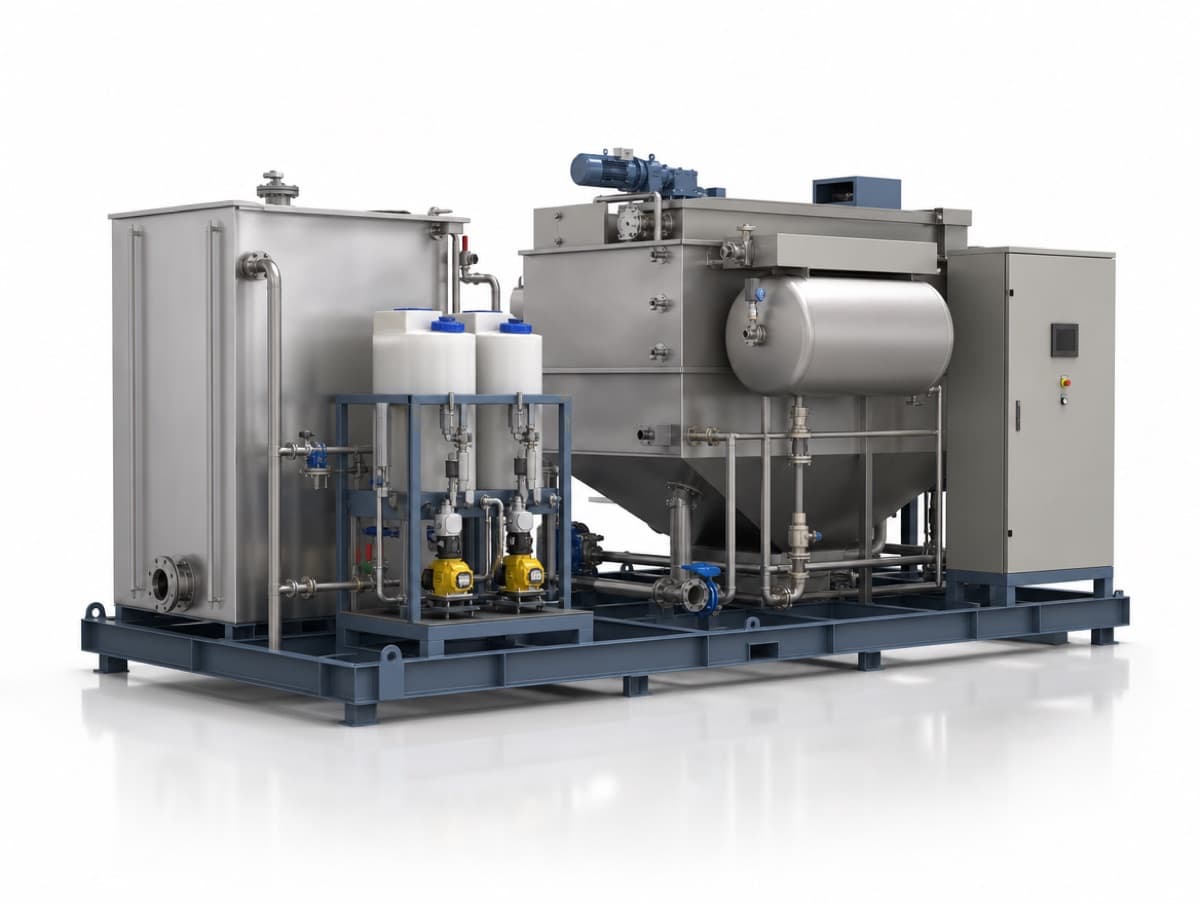
Closest matching equipment: Industrial Wastewater Treatment Systems (By quote)
When anaerobic wastewater treatment beats aeration
Aerobic treatment burns organic load with blowers; anaerobic wastewater treatment digests it without oxygen and hands you back energy. Above roughly 2,000 mg/L COD, the economics flip: aeration power grows with the load you destroy, while an anaerobic reactor consumes almost none, produces a fraction of the sludge, and generates biogas at about 0.35 m³ of methane per kilogram of COD removed. For a brewery, dairy, distillery or rendering plant, that is heat you currently buy as natural gas.
The trade-offs are real and worth stating plainly. Anaerobic biology is slower to start, sensitive to pH and temperature swings, and rarely reaches discharge quality on its own. In practice it is a pre-treatment stage: the reactor removes 70 to 90 percent of the COD cheaply, and a compact aerobic polishing step finishes the job.
Reactor formats we supply:
- UASB (upflow anaerobic sludge blanket): the industry default for soluble, high-strength effluent
- EGSB (expanded granular sludge bed): taller, faster upflow, smaller footprint for the same load
- Anaerobic MBR: membranes retain the biomass, for hard-to-granulate or variable wastes
- Covered anaerobic lagoons: lowest cost per cubic metre where land is available
Anaerobic treatment in a Canadian climate
The standard mesophilic operating window is 35 to 38 °C, which sounds like a problem in a country with -30 °C winters. It usually is not: high-strength effluents from food and beverage processes often leave production warm, and the biogas itself fires the reactor heating loop. The design work is in the heat balance, insulation and feed equalization, which is exactly the part we engineer before quoting.
If your plant trucks waste to a digester today, or your aeration power bill climbs every production expansion, send us your COD, flow and temperature profile. We will model reactor size, biogas yield and payback against your current disposal and energy costs, and quote the system with the polishing stage included.
FAQ
Frequently Asked Questions
Everything you need to know about our services.
Is anaerobic treatment better than aerobic?
Neither is better in general. Anaerobic wins on high-strength effluent because it cuts energy and sludge; aerobic wins on dilute effluent and for final polishing. The lab report decides.
What effluent strength justifies anaerobic treatment?
As a rule of thumb, high-strength organic effluent such as brewery, dairy or food-plant discharge is the candidate. Below that, the reactor runs cold and slow and aerobic treatment is simpler. A COD analysis of your effluent settles it.
Does anaerobic treatment work in Canadian winters?
Yes, because the reactor is insulated and heated, often using the biogas it produces. The design accounts for your building layout and incoming effluent temperature; that is part of the sizing questions we ask before quoting.
Send the flow rate. Get the system.
Flow, contaminants, discharge limit. An engineer replies with a sized treatment train and a quote — no obligation.