Loading...
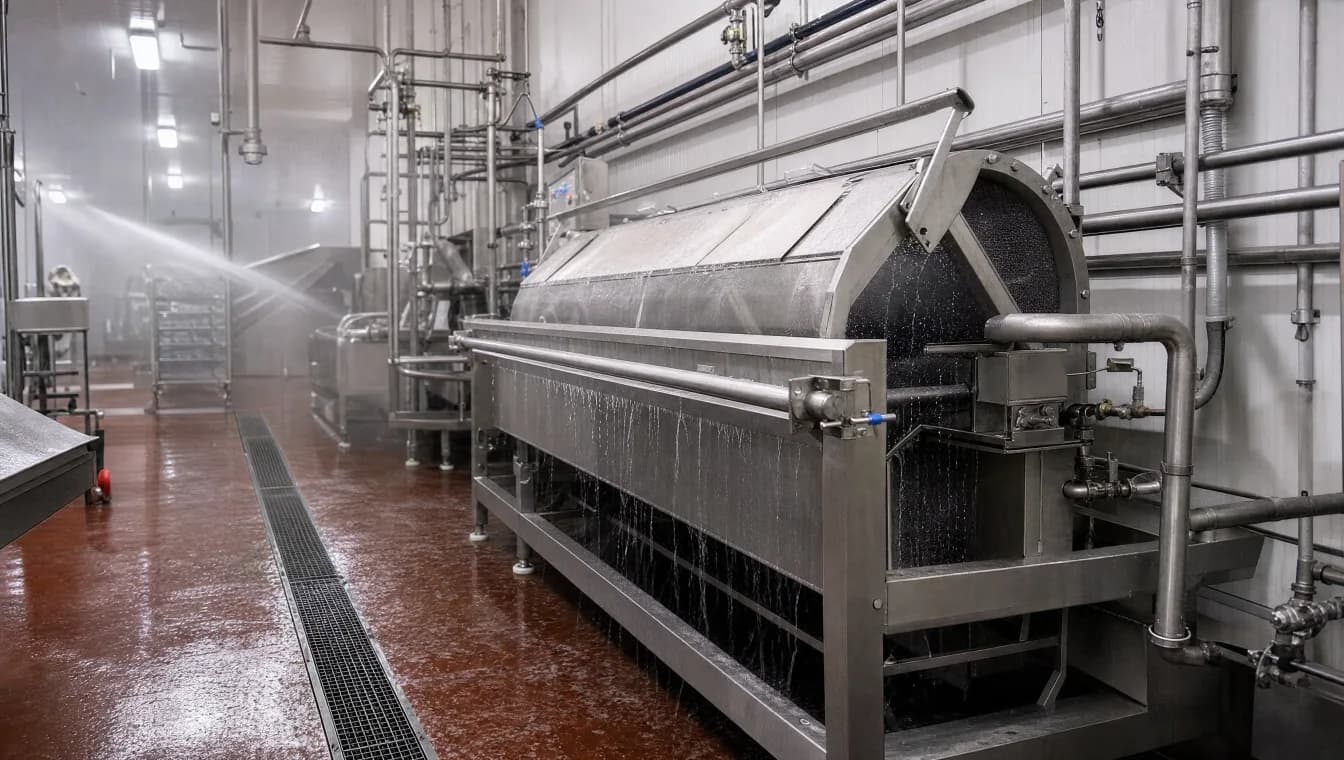
Industrial wastewater treatment equipment for Meat & Poultry Processing
Rotary screening of paunch and solids · DAF for blood and fat removal · Effluent disinfection before discharge
Why Meat & Poultry Processing Chooses Industrial Wastewater Canada
No industrial effluent responds better to dissolved air flotation than meat processing wastewater. Blood, fat, grease and manure solids are exactly the contaminants DAF was built to remove, which is why a properly conditioned flotation unit at a slaughterhouse or rendering plant will routinely capture the bulk of the incoming load in a single step. The engineering challenge in meat processing wastewater treatment is not choosing the core technology. It is sizing for a load that changes with every species, shift and wash-down cycle.
Blood management comes first
Blood management decides half the outcome before treatment starts. A plant that captures blood at the kill floor and sells it or renders it keeps an enormous BOD load out of the drain. A plant that lets it reach the sewer will fight that decision at every downstream stage. The same logic applies to paunch content and manure solids, which belong in dry handling and screening rather than in suspension.
The wet-side treatment train
The wet-side treatment train is consistent across the sector: coarse and fine screening, an equalization tank to buffer wash-down peaks, then DAF with coagulant and polymer dosing. Fat recovered in the float has rendering value, so the sludge line is a revenue question as much as a disposal one. Plants discharging under a provincial permit rather than to a municipal sewer add biological treatment, most often an anaerobic stage for the strength followed by aerobic polishing for the ammonia that blood and protein break down into.
A closely watched sector
Canadian regulators watch this sector closely. Federally inspected plants answer to both CFIA sanitation requirements, which drive the water use up, and to sewer bylaws or Fisheries Act provisions, which drive the discharge quality requirement. The two pressures meet in the effluent plant.
Equipment for abattoirs and renderers
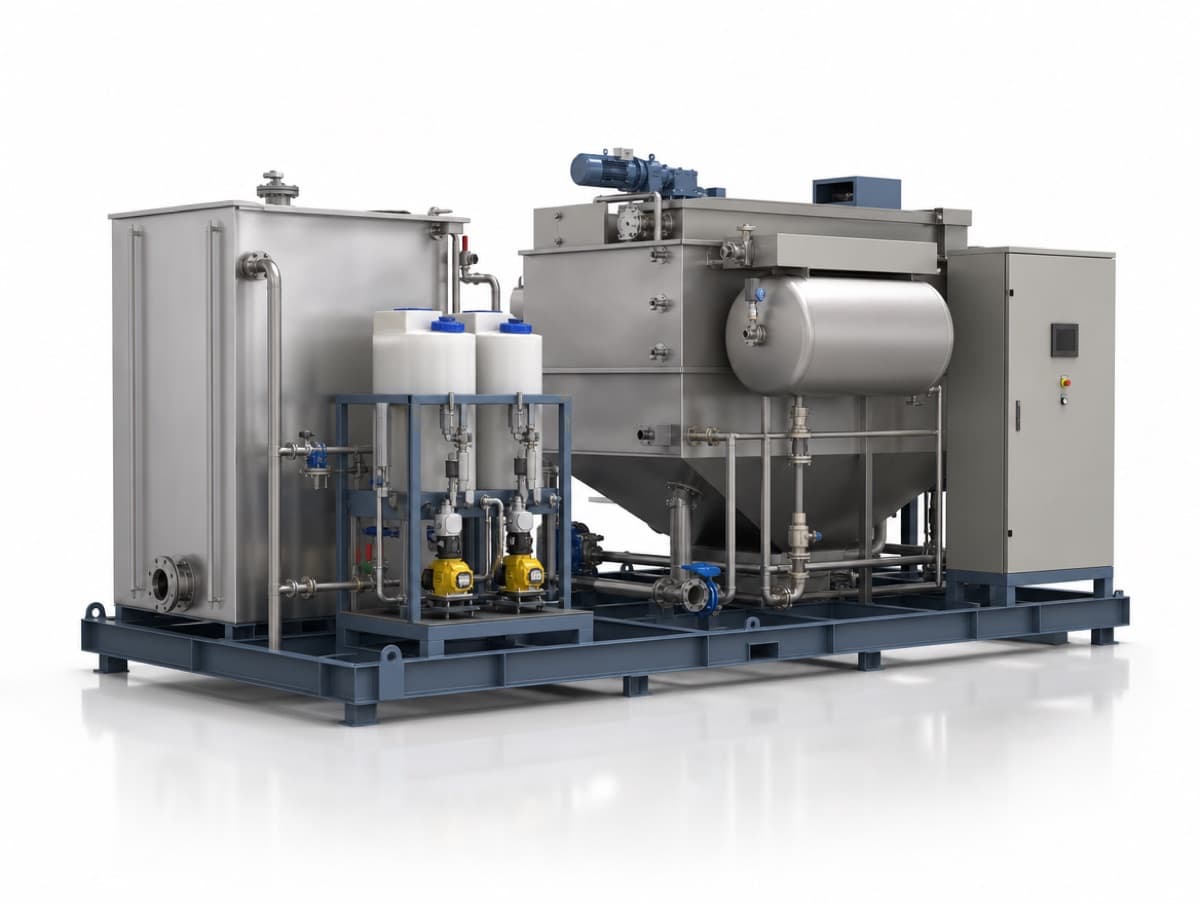
We supply screens, DAF systems, dewatering presses and complete packaged plants for abattoirs, poultry processors and rendering operations. Bring us your kill schedule, water use and a composite analysis, and we will return a sized proposal with realistic sludge-handling numbers rather than brochure figures. Poultry plants deserve a specific mention, because feathers and scald-tank water behave differently from red-meat streams and change both the screening selection and the DAF chemical program, a distinction that generic sizing tables consistently miss.
| Sector | Meat & Poultry Processing |
|---|---|
| Common applications | Rotary screening of paunch and solids · DAF for blood and fat removal · Effluent disinfection before discharge |
| Service area | Canada |
Key takeaways
- Rotary screening of paunch and solids
- DAF for blood and fat removal
- Effluent disinfection before discharge
Meat & Poultry Processing Wastewater Treatment Use Cases
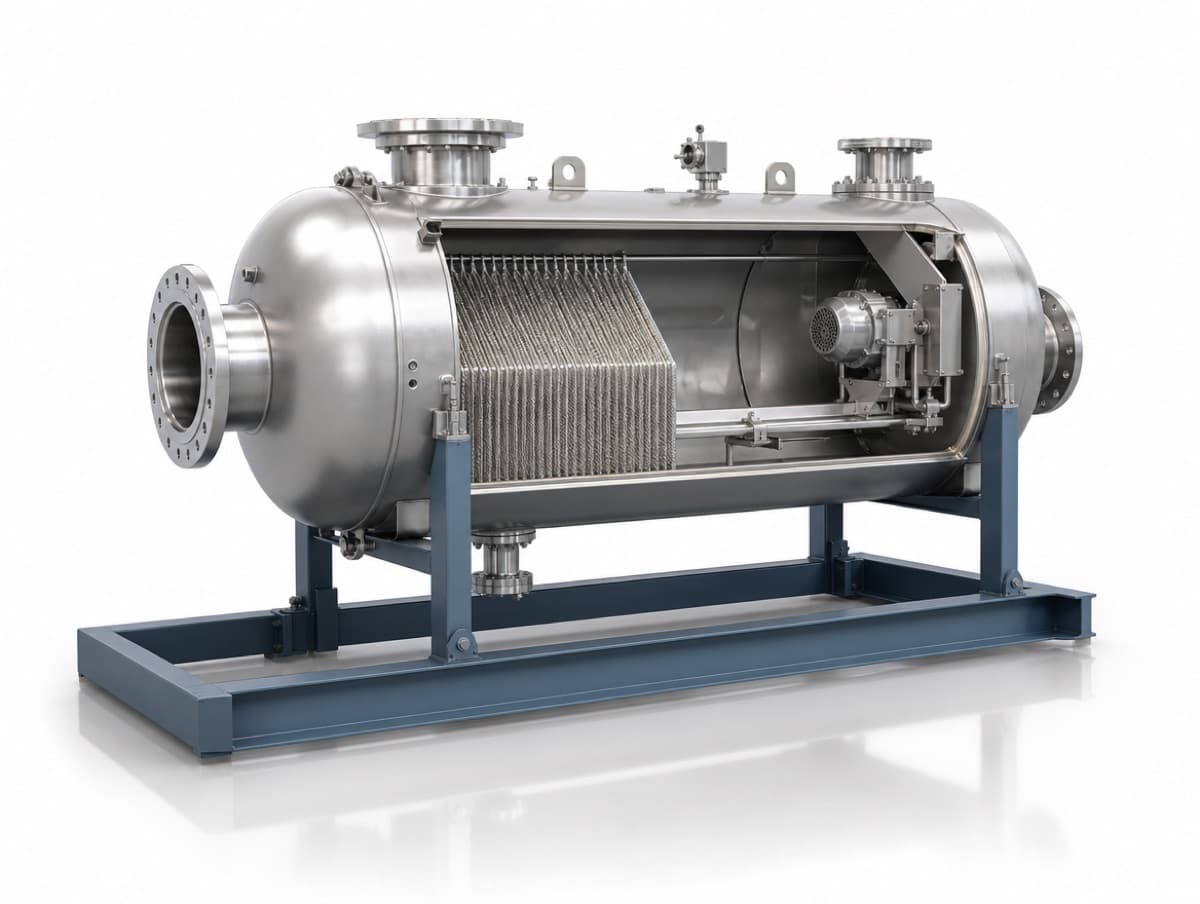
Rotary screening of paunch and solids
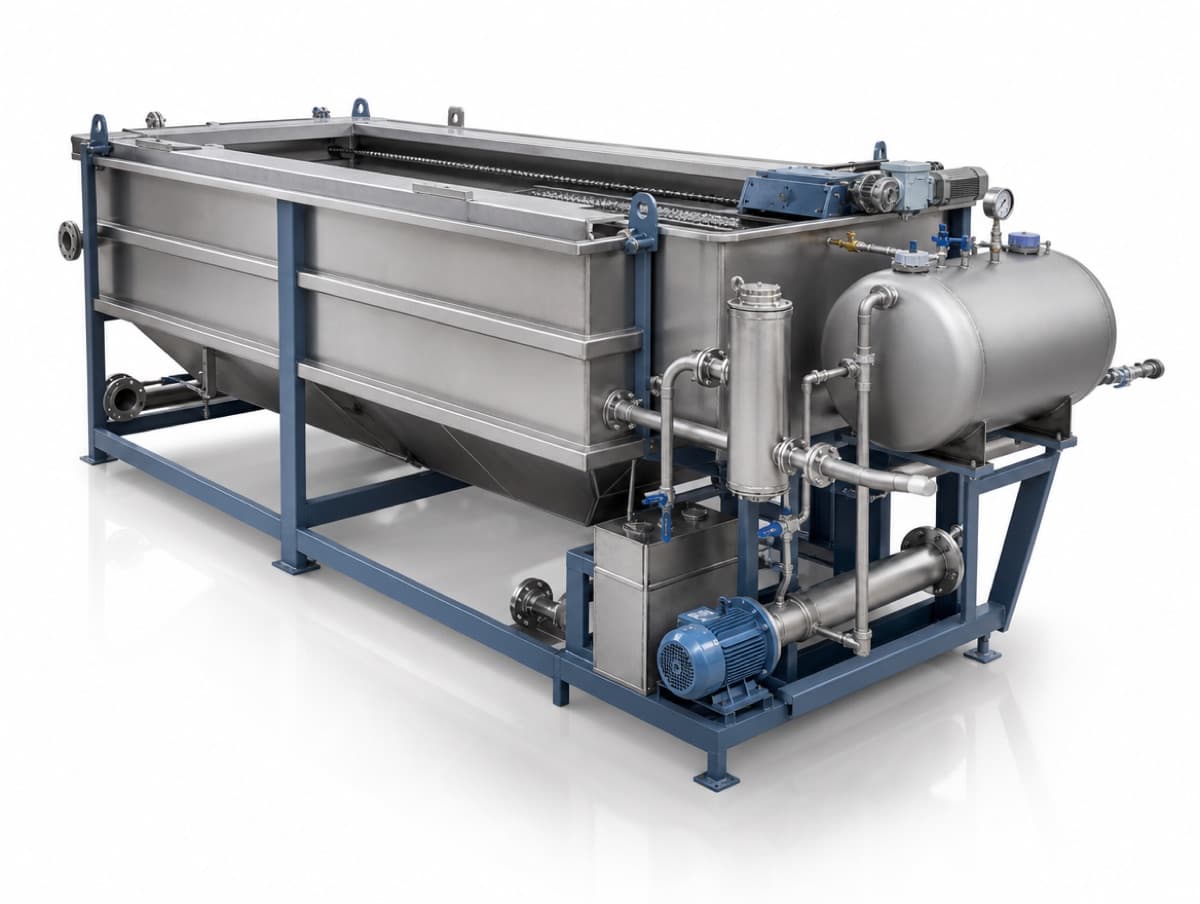
DAF for blood and fat removal
Effluent disinfection before discharge
FAQ
Frequently Asked Questions
Everything you need to know about our services.
What makes Meat & Poultry Processing wastewater difficult to treat?
No industrial effluent responds better to dissolved air flotation than meat processing wastewater. Blood, fat, grease and manure solids are exactly the contaminants DAF was built to remove, which is why a properly conditioned flotation unit at a slaughterhouse or rendering plant will routinely capture the bulk of the incoming load in a single step.
Which treatment steps apply in Meat & Poultry Processing plants?
The applications we are asked for most often in this sector: Rotary screening of paunch and solids, DAF for blood and fat removal and Effluent disinfection before discharge. The actual train is assembled from your effluent characterization, not from a sector template.
What do you need to quote a Meat & Poultry Processing project?
Three things: your flow rate, a recent lab analysis or a plain description of the process generating the water, and where the effluent goes (municipal sewer, provincial permit or reuse). With those we return a sized configuration, budget price and delivery timeline.
Do you serve Meat & Poultry Processing sites outside major cities?
Yes. We cover Canada, including remote sites with no municipal sewer connection, where containerized or skid-mounted packages are usually the right answer.
Send the flow rate. Get the system.
Flow, contaminants, discharge limit. An engineer replies with a sized treatment train and a quote — no obligation.