Loading...
API Oil Water Separator
API oil water separators built to the API 421 gravity design for refineries, terminals and heavy industry across Canada. Sized by flow and oil load.
Key takeaways
API Oil Water Separator: API oil water separators built to the API 421 gravity design for refineries, terminals and heavy industry across Canada. Sized by flow and oil load.
Closest matching equipment: Oil Water Separators (By quote)
What makes a separator an API oil water separator
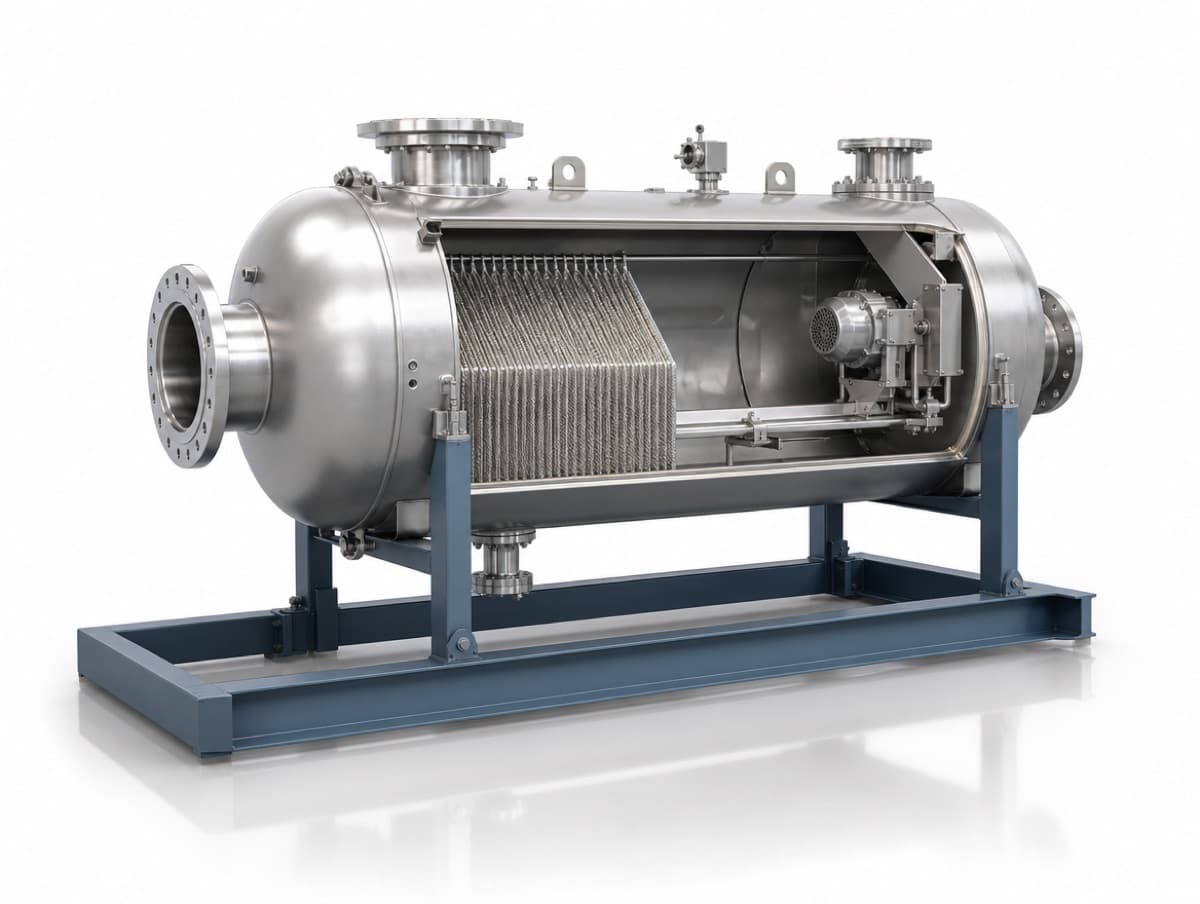
An API oil water separator is a gravity separator proportioned to the American Petroleum Institute's API 421 design method, the standard the refining industry has used for decades. API 421 sizes the channel so that an oil droplet of 150 microns rises to the surface before the water reaches the outlet, using the design flow, the specific gravity of the oil, and the water temperature and viscosity. The result is a long rectangular channel with a flight scraper or slotted-pipe skimmer on top and a sludge hopper below.
That 150-micron basis is the honest limitation as well as the strength. An API separator reliably strips free oil down to roughly 50 to 100 mg/L in the effluent, which is exactly what it was designed to do as the first stage of refinery treatment. It is not a polishing device: meeting a 15 mg/L hydrocarbon limit takes a downstream CPI pack, induced-gas flotation or a DAF.
Where API separators earn their keep:
- Refineries and petrochemical plants, their original home, ahead of biological treatment
- Tank farms, terminals and rail loading, where oily stormwater arrives in surges
- Produced-water and oilfield services sites in Alberta and Saskatchewan, where EPEA approvals govern discharge
API separator specification for Canadian sites
Specifying one properly means resisting the urge to buy on footprint. The API method fixes minimum length-to-width and depth ratios; a shorter tank sold as "API style" simply is not one, and it will pass oil on the first cold day, since oil viscosity and rise rate both worsen as temperature drops. Canadian winter design temperature belongs in the sizing calculation, not the commissioning punch list.
We supply API 421-proportioned separators in carbon steel with epoxy linings or stainless, with covers for vapour control, flame arrestors where the fire code calls for them, and chain-and-flight scrapers for continuous sludge removal. Send design flow, oil specific gravity and your winter water temperature, and we will return the API sizing sheet with the quote so your engineer can check the math.
See the full oil-water separator line, the coalescing filter plates that upgrade one, or request a quote with your flow and oil load.
FAQ
Frequently Asked Questions
Everything you need to know about our services.
What is the difference between an API separator and a compact plate separator?
API refers to the gravity channel design in API Standard 421. Compact separators use coalescing plates or media instead. API units handle more grit and larger flows; plate units reach finer droplets in less space.
How often does an API separator need to be cleaned out?
It depends on the solids and oil load coming in. The skimmed oil and settled sludge are pumped out on a schedule set during the first months of operation; many sites settle into a quarterly or semi-annual routine.
Can an API separator alone meet my discharge limit?
Sometimes. Gravity separation removes free oil, but emulsified oil passes through. If your permit limit is tight or your effluent carries emulsions, the separator becomes the first stage ahead of chemical treatment or flotation.
Send the flow rate. Get the system.
Flow, contaminants, discharge limit. An engineer replies with a sized treatment train and a quote — no obligation.