Loading...
Oil Water Separator Tank
Oil water separator tanks in steel, HDPE and concrete for garages, wash bays and industrial sites across Canada. Above and below grade.
Key takeaways
Oil Water Separator Tank: Oil water separator tanks in steel, HDPE and concrete for garages, wash bays and industrial sites across Canada. Above and below grade.
Closest matching equipment: Oil Water Separators (By quote)
How an oil water separator tank works
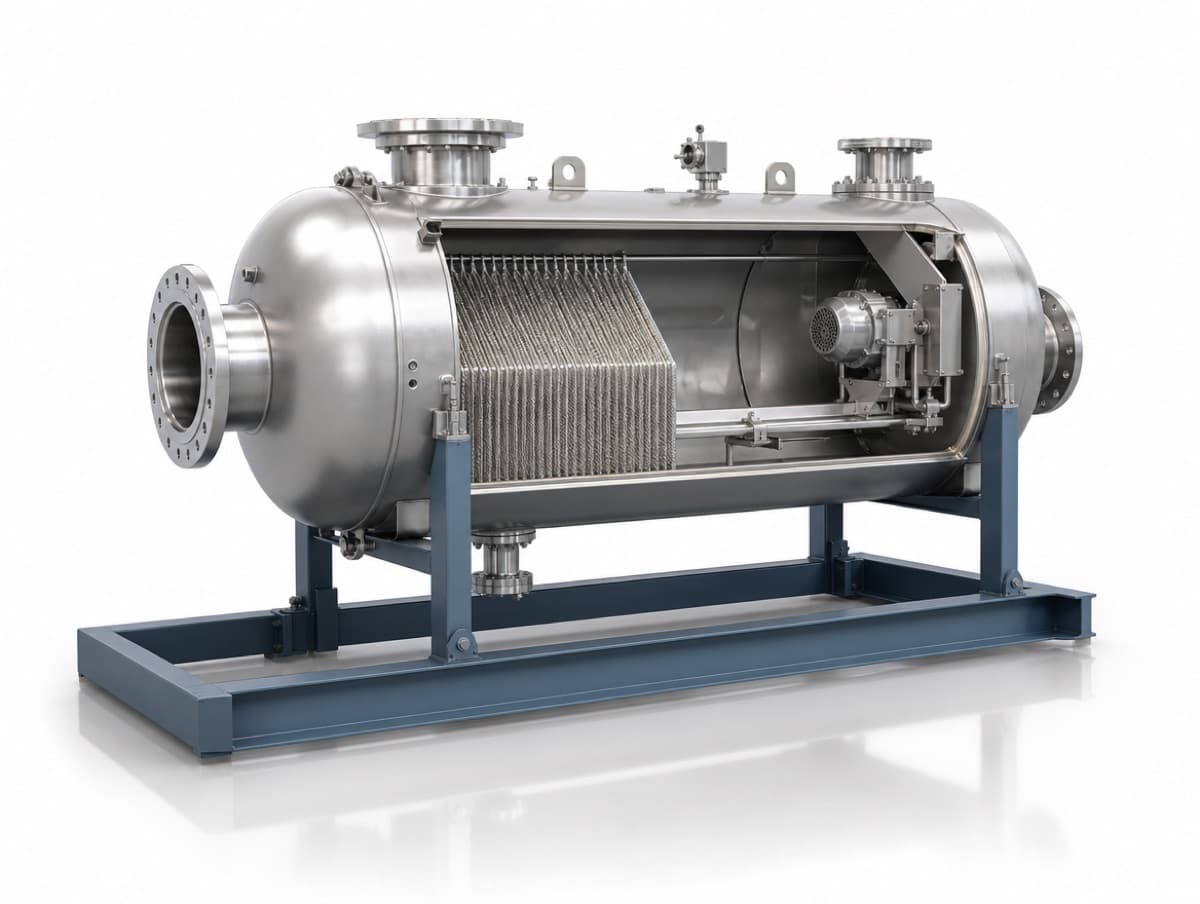
An oil water separator tank does one job: it gives oil droplets enough quiet time to rise. Oil is lighter than water, so in a tank with laminar flow, droplets float to the surface where a skimmer or rotating pipe draws them off, while cleaned water leaves under a baffle. The physics is Stokes' law: bigger droplets rise faster, so everything about separator design comes down to residence time and droplet size.
That physics also sets the limit. Gravity tanks catch free oil, the droplets large enough to rise within the tank. They do not touch emulsified oil, droplets stabilized by detergents, heat or shear from centrifugal pumps. If your process uses surfactant cleaners, expect to pair the tank with chemical emulsion breaking or a DAF downstream.
Configurations we quote most often:
- Simple gravity tanks for low flows and coarse oil, such as equipment yards and wash bays
- Coalescing plate separators (CPI), where inclined plate packs multiply the effective settling area and shrink the footprint several-fold
- Below-grade interceptor tanks for vehicle shops and fuelling areas, tied into the storm or sanitary line
Sizing and installing a separator tank in Canada
Sizing starts from three numbers: peak flow, inlet oil concentration and the outlet limit in your sewer-use bylaw or permit. Municipal bylaws such as Toronto's By-law 681 and Metro Vancouver's Bylaw 299 set the FOG and hydrocarbon limits most of our customers must meet, and undersized separators are a standard inspection finding.
Canadian installs add two practical constraints. Outdoor and below-grade tanks need freeze protection or burial below frost depth, and any tank on a fuelling site should be specified with materials and venting that match the fire code.
We supply carbon steel, stainless and polyethylene tanks from wash-bay scale to full process flows, with high-oil-level alarms and sludge baffles. Send peak flow and your discharge limit; we will size the tank, confirm free versus emulsified oil from a sample, and quote supply or supply-and-install.
Details and sizing are on the oil-water separator page; downstream polishing options include DAF systems. Request a quote with your tank footprint and flow.
FAQ
Frequently Asked Questions
Everything you need to know about our services.
Do I need an oil water separator tank for a two-bay garage?
In most Canadian municipalities, yes: any floor drain in a vehicle service area must pass through an oil interceptor before the sanitary sewer. Check your local sewer-use bylaw or send us the drawings.
What size of oil water separator tank do I need?
Sizing follows the peak flow through your floor drains, not the building size. Count the drains, estimate wash-down flow, and check the interceptor sizing table in your municipal bylaw. We size it from your drawings at no charge.
Is an oil water separator the same as a grease trap?
No. A grease trap handles animal and vegetable fats from kitchens; an oil water separator handles petroleum products from garages, shops and yards. Bylaws treat them as different devices and inspectors check for the right one.
Send the flow rate. Get the system.
Flow, contaminants, discharge limit. An engineer replies with a sized treatment train and a quote — no obligation.