Key Takeaways
- Sizing starts with four numbers: peak flow, contaminant concentrations, your discharge limit and available floor space.
- A composite sample taken over a full production day beats a grab sample every time.
- Size for peak flow, not average flow, or install equalization ahead of the system.
- Oversizing wastes capital; undersizing puts you offside with your municipality.
Most sizing conversations go wrong in the first five minutes, because the plant does not yet know its own water. A quote request that says "we need a DAF for a food plant" cannot be priced. One that says "we run 25 m³/h at peak, our BOD sits around 1,800 mg/L, and our city caps us at 300 mg/L" can be sized the same week. This article walks through the four numbers that matter and how to get each one.
What industrial wastewater treatment systems are sized against
Every technology in the catalogue, from a DAF system to a membrane bioreactor, is rated against the same short list of inputs. The equipment differs; the inputs do not.
- Peak flow, not average flow. A plant that averages 10 m³/h but hits 30 m³/h during washdown needs equipment rated for 30, or an equalization tank in front of it. Undersized hydraulics is the most common failure we see in existing installations.
- Contaminant concentrations. At minimum: TSS, BOD or COD, and oil and grease if you have any. Metals for a plating shop, ammonia for rendering and meat processing.
- The discharge limit you have to meet. Sewer-use bylaw values if you discharge to municipal sewer, or your permit values if you discharge to surface water under a provincial approval and the federal Fisheries Act.
- Available footprint. A lamella clarifier treats the same flow as a conventional clarifier in roughly a fifth of the floor area. When space is tight, footprint eliminates options faster than chemistry does.
Getting a sample that tells the truth
A grab sample taken at 10 a.m. describes your water at 10 a.m. Industrial effluent swings hard across a shift: a brewery's COD can triple during tank cleaning, and a meat plant's grease load peaks at washdown. The standard reference on the subject, Metcalf and Eddy's Wastewater Engineering, recommends flow-proportional composite sampling for exactly this reason.
The practical version for a plant without an autosampler: pull a sample every hour across one full production day, including cleanup, and have the lab run the composite. Two composites from different production days are better. The cost is a few hundred dollars in lab fees, and it prevents the two expensive mistakes: buying a system sized for your calm mid-morning water, or paying for capacity your effluent never uses.
Matching the numbers to the technology
Once the numbers exist, the technology short-list usually writes itself. The table below shows where each main equipment family fits.
| Your problem | Typical equipment | What it achieves |
|---|---|---|
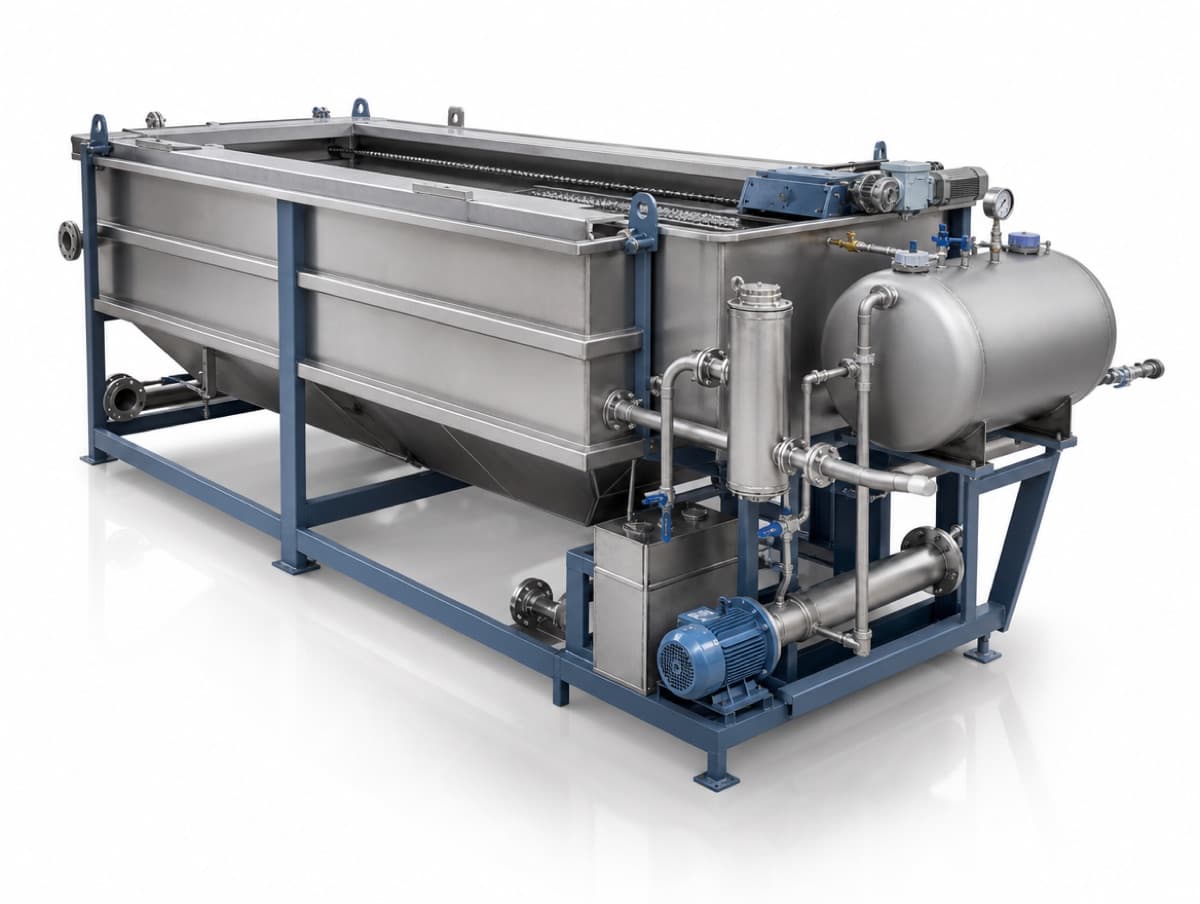
| Suspended solids, fats, oil and grease | Dissolved air flotation | High TSS and FOG removal with chemical pretreatment |
| Free oil, fuel, hydraulic fluid | Oil-water separator | Free oil down to roughly 10 to 15 mg/L; coalescing designs lower |
| Dissolved organics (high BOD/COD) | MBBR or MBR | Deep BOD reductions; MBR effluent TSS under 5 mg/L |
| Settleable solids, metal hydroxides | Lamella clarifier | Clarification in a fraction of a conventional clarifier's footprint |
| Dissolved salts, water reuse targets | Reverse osmosis | Near-complete dissolved solids rejection |
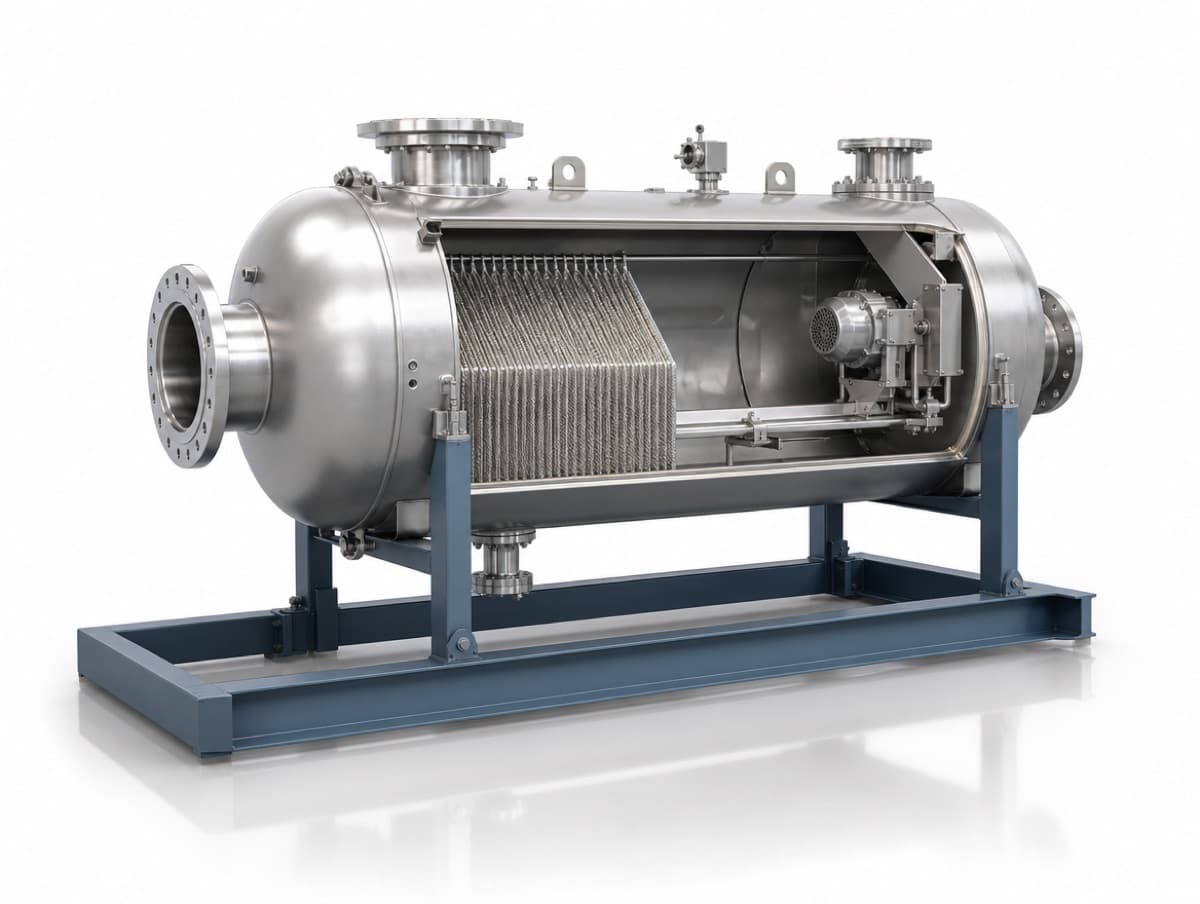
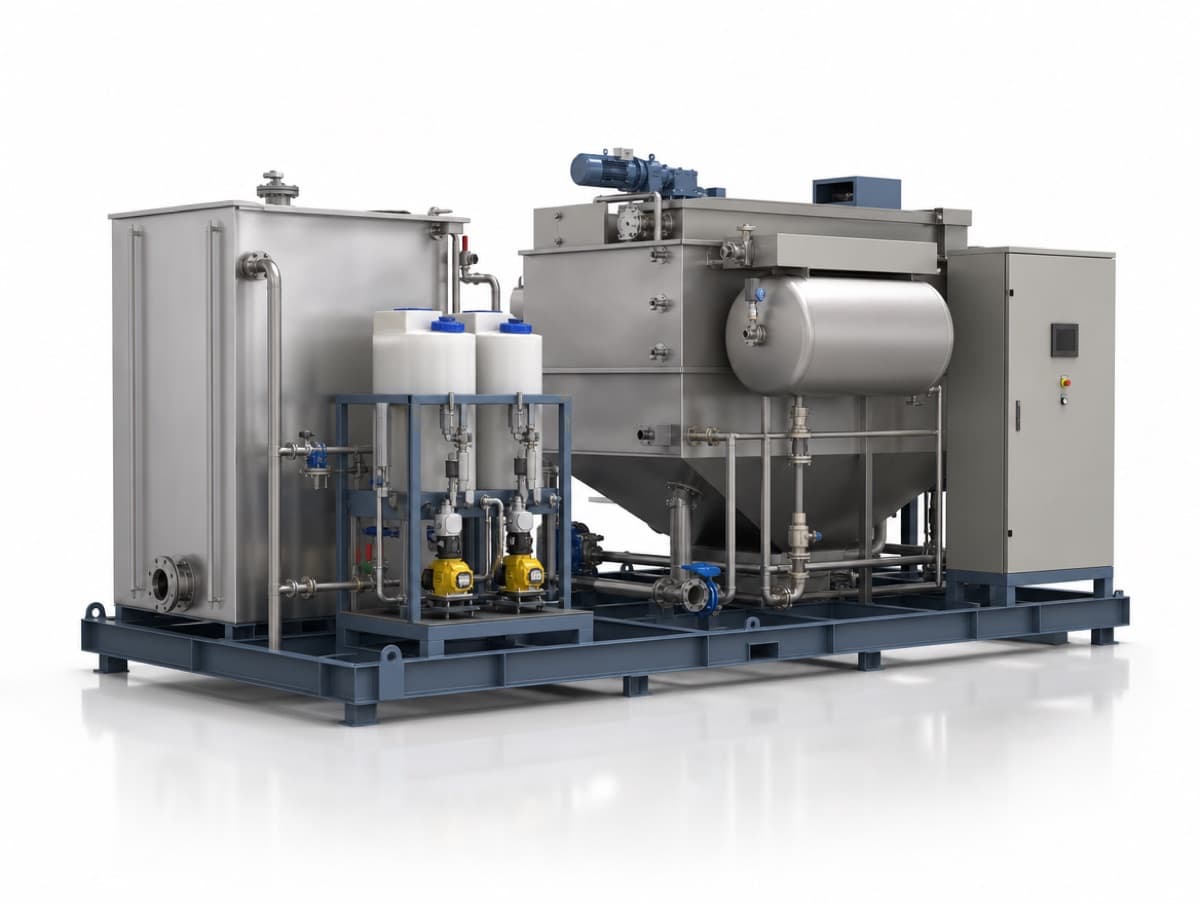
Real plants usually need a train rather than a single unit: screening, then physical-chemical treatment, then biological treatment if dissolved organics remain, then sludge handling. The train is still sized from the same four numbers. The order matters as much as the selection, because each stage protects the one behind it. A screen that removes gross solids keeps the DAF nozzles clear, and a DAF that strips fats keeps the biology downstream from being smothered.
What a complete quote request looks like
The requests that turn into accurate proposals fastest include six things:
- Peak and average flow
- The lab composite results
- The bylaw or permit limits you must meet
- The hours per day the plant discharges
- The floor area and ceiling height you can offer
- Whether an operator will be on site or the system must run unattended
Missing items are workable; we ask, you measure, the quote waits. But every gap adds a week.
The two sizing mistakes that cost the most
- Sizing for average flow. The system runs fine for three weeks, then washdown day arrives, the DAF hydraulically overloads, and the surcharge letter follows. Fix: size for peak, or install equalization and size for the equalized rate.
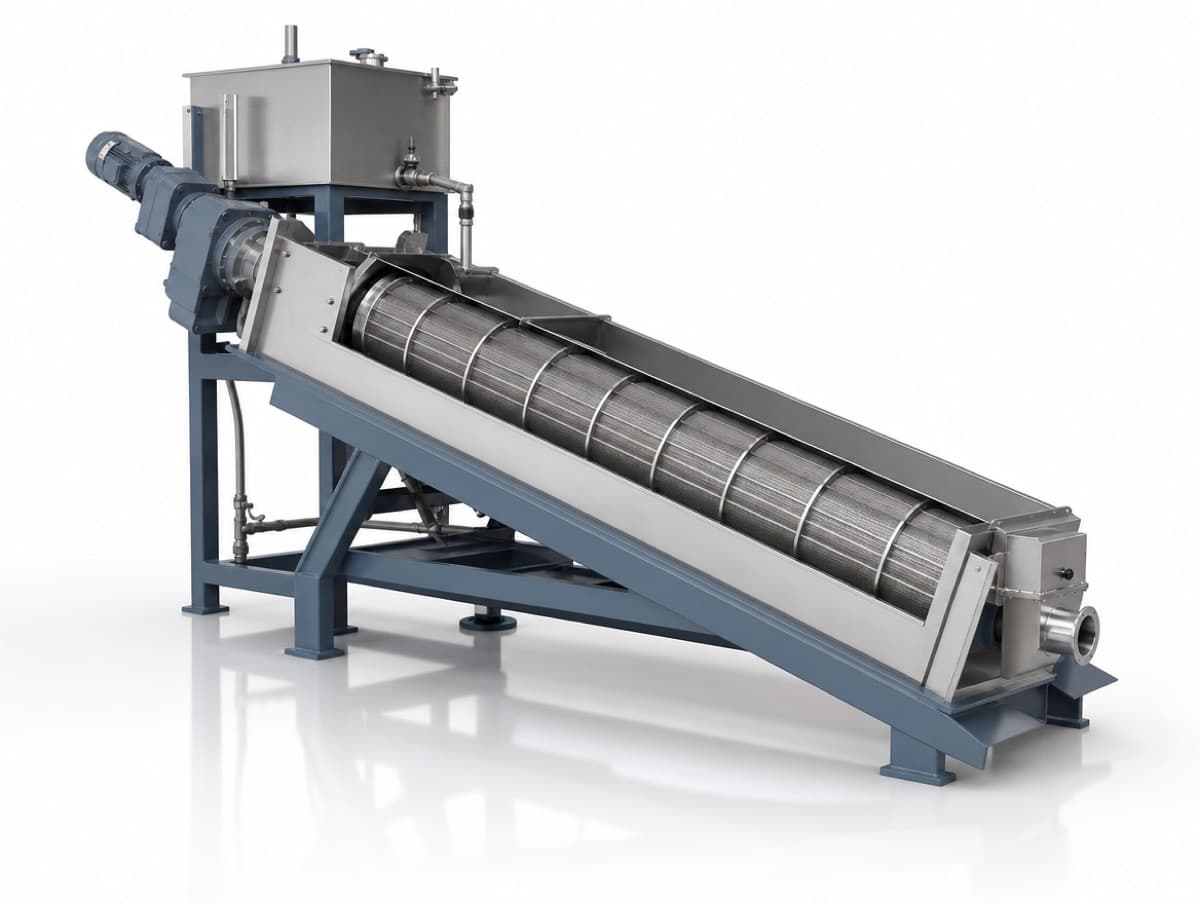
- Ignoring the sludge. Every separation process concentrates contaminants into a sludge stream, often a small fraction of the inlet flow. Plants that skip dewatering end up trucking dilute sludge at full haulage rates. A screw press or centrifuge typically pays for itself in reduced haulage within a few years.
If you have the four numbers, or even three of them, send them through our quote form along with your industry. What comes back is a sized proposal your engineer can review, not a brochure. If you are still collecting data, the industry pages describe the typical effluent profile for each sector, which is a reasonable starting point for planning a sampling campaign.
FAQ
Can you size a system from a single grab sample? We can produce a preliminary short-list from one sample, but a firm proposal needs at least one full-day composite. A grab sample routinely misreads BOD by a factor of two or more on plants with batch cleaning cycles.
What if my flow will grow over the next few years? Tell us the growth plan. Most equipment families can be sized with expansion in mind, for example a DAF vessel sized for the future flow with chemical dosing scaled up later, which is far cheaper than replacing the unit.
Do you size systems remotely? Yes. Sizing runs on your numbers, not on a site walk. A plant in Alberta goes through the same process as one in the Greater Toronto Area.
Industrial Wastewater Canada Technical Team
Process Equipment Specialists
Industrial Wastewater Canada Technical Team writes about industrial wastewater treatment equipment and related topics for Industrial Wastewater Canada.
This article was AI-assisted and reviewed by the Industrial Wastewater Canada Technical Team.