Key Takeaways
- Sludge haulage is priced by the tonne, and most of each tonne is water.
- A screw press is the low-energy, low-attention choice for most industrial sludges.
- A centrifuge produces the driest cake but draws the most power and polymer.
- Compare on cost per dry tonne over ten years, not purchase price.
Every separation process upstream, whether a DAF, a clarifier or a biological system, concentrates contaminants into sludge. That sludge is still overwhelmingly water, which means a truck hauling it away is mostly shipping water at full haulage rates. Dewatering exists to stop paying to ship water. The question is which machine, and the answer depends on your sludge volume, your power cost and how much operator time you can give it.
The three sludge dewatering technologies in brief
All three accept flocculated sludge and separate water mechanically. They differ in how hard they work the sludge and what that effort costs.
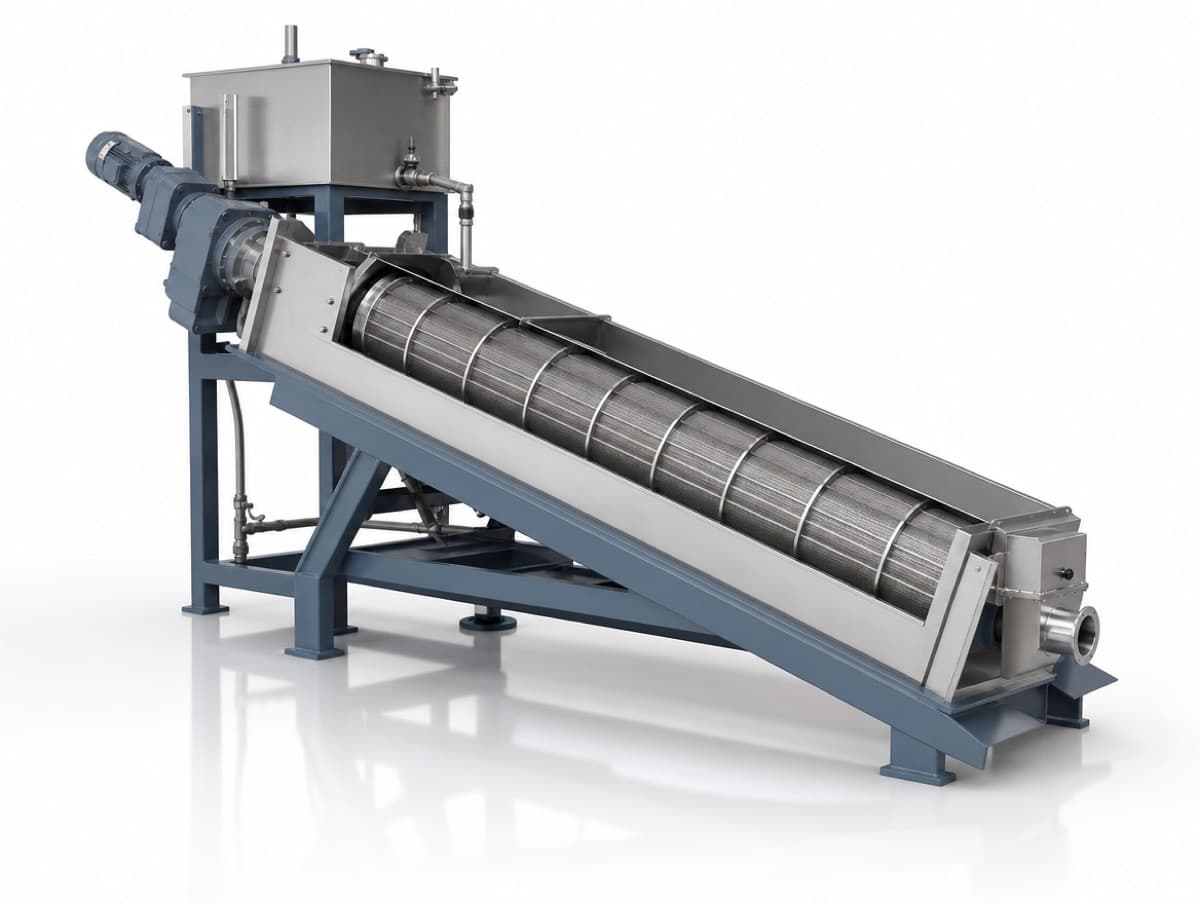
- A screw press squeezes sludge slowly against a screen with a rotating screw. Slow, quiet, and frugal: it turns at a few RPM and runs largely unattended.
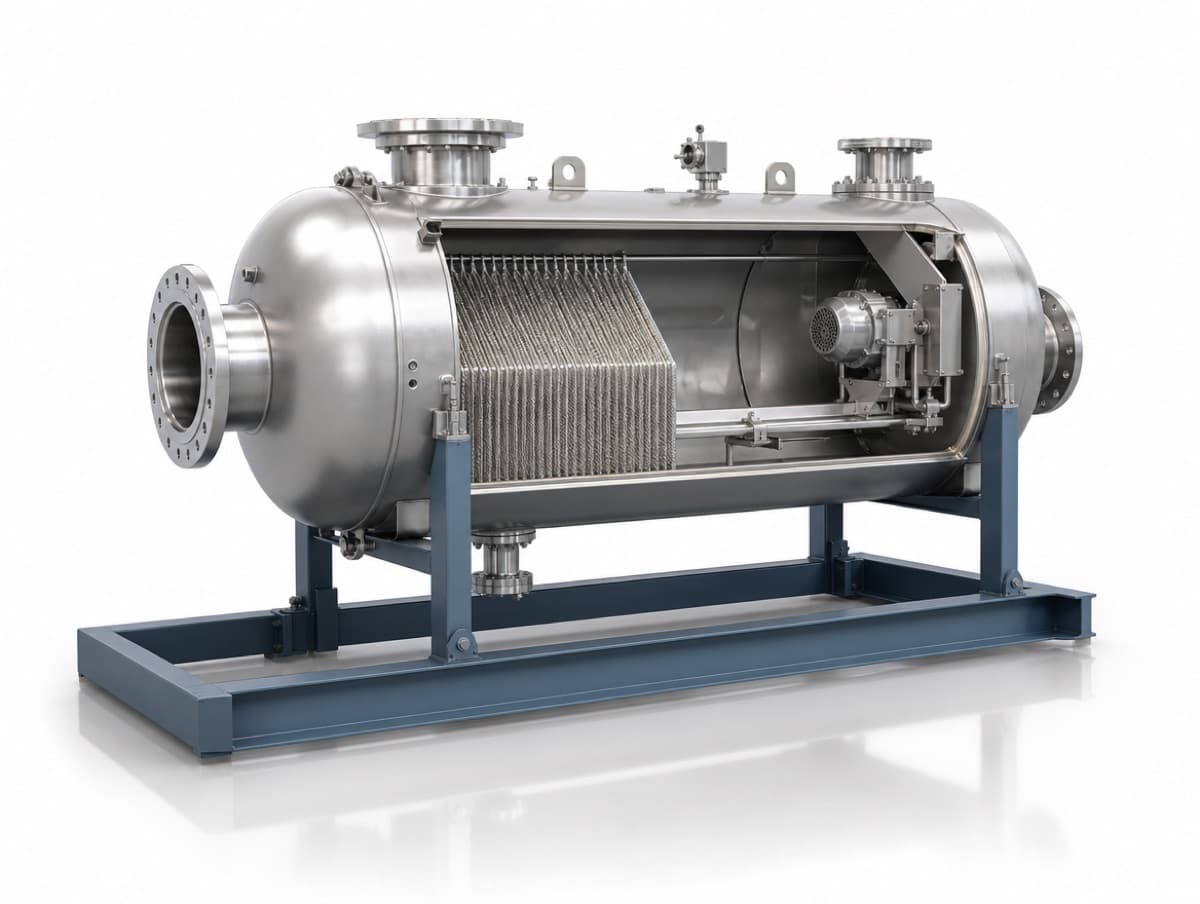
- A dewatering centrifuge spins sludge at several thousand G and throws the water out. Compact and enclosed, it produces the driest cake of the three, at the price of the highest power draw and maintenance skill.
- A belt filter press presses sludge between two moving belts through a series of rollers. Proven at municipal scale, it handles large volumes at moderate energy but wants regular operator presence and belt wash water.
The comparison table
Typical ranges for industrial sludges, drawn from standard design references including Metcalf and Eddy. Your sludge will land somewhere specific inside them, which is what pilot testing is for.
| Screw press | Centrifuge | Belt filter press | |
|---|---|---|---|
| Typical cake dryness | Dry, stackable cake | The driest of the three | The softest of the three |
| Relative energy use | Lowest | Highest | Moderate |
| Polymer demand | Moderate | Moderate to high | Moderate |
| Operator attention | Minimal; runs unattended | Low, but repairs need specialists | Regular presence during operation |
| Noise and enclosure | Quiet, fully enclosed | Loud, fully enclosed | Open; wash-down area needed |
| Wash water | Intermittent, small | None in operation | Continuous belt wash |
| Best fit | Most industrial plants without a dedicated operator | Space-limited sites; dryness-critical disposal | High-volume sites with staffed dewatering |
What the polymer line does to the comparison
All three machines depend on upstream flocculation, and polymer is the recurring cost that catches buyers off guard. Dose requirements vary with the sludge, but a centrifuge working at high G typically demands more polymer per dry tonne than a screw press treating the same material, because the shear inside the bowl breaks weak flocs and the dose has to compensate.
On a small plant the difference is noise. On a plant moving hundreds of wet tonnes a month it becomes a budget line that deserves its own row in the comparison, next to power and haulage. Ask every vendor for a guaranteed polymer consumption figure from the pilot run, in kilograms of active polymer per dry tonne, and hold the quotes to the same units so they can actually be compared.
Working the decision with your own numbers
The honest comparison is cost per dry tonne over ten years, not the purchase order. Work it in this order:
- Start from haulage. Take your current wet tonnes per month and your disposal rate. Every extra point of cake dryness cuts hauled mass substantially, which is the centrifuge's main argument.
- Price the power. A centrifuge can draw several times the kWh per tonne of a screw press. At industrial electricity rates in most provinces this gap narrows but rarely closes the haulage saving; run both numbers.
- Count the operator hours. A belt press that needs an operator present through every run is only cheap if that person is already on shift.
- Pilot before you commit. Reputable suppliers, ourselves included, will run your actual sludge on a pilot or demonstration unit. Dewaterability varies enough between sludges that the table above is a short-list tool, not a purchase decision.
One caution from the field: biological sludges from an MBBR or activated sludge plant dewater harder than physical-chemical DAF float. If your plant produces both, size the machine for the blend you will actually feed it, not for the easier stream. A press piloted on DAF float alone will disappoint the day the biological stream joins it, and the disappointment shows up as wetter cake and a bigger haulage invoice.
If you know your wet tonnes per month and your current disposal cost, the quote form takes both, and the response will include the haulage math for each machine that fits your volume. Plants anywhere in our Canadian service area go through the same remote sizing process.
FAQ
What cake dryness should I expect from my sludge? The table ranges hold for typical industrial sludges, but the honest answer comes from a pilot run on your material. Biological sludges land at the low end of each range; oily DAF float from food plants often dewaters better than expected.
Is the polymer the same for all three machines? The chemistry family is usually the same, but the dose and preparation differ. A centrifuge typically wants a higher dose of a tougher, higher-molecular-weight polymer than a screw press on the same sludge.
Can one machine handle sludge from two different processes? Yes, if it was sized for the blend. Mixing a biological sludge into DAF float changes dewaterability noticeably, so pilot the actual mixture rather than the easier stream alone.
Industrial Wastewater Canada Technical Team
Process Equipment Specialists
Industrial Wastewater Canada Technical Team writes about industrial wastewater treatment equipment and related topics for Industrial Wastewater Canada.
This article was AI-assisted and reviewed by the Industrial Wastewater Canada Technical Team.