Loading...
Pharmaceutical & Biotech in Montreal, Quebec
Industrial Wastewater Canada sizes and supplies pharmaceutical & biotech for plants in Montreal, Quebec. Local demand is driven by aerospace, food & beverage, pharmaceuticals, petrochemicals, discharging under Montreal's sewer-use rules toward St. Lawrence River. Quote requests with flow rate and effluent type get a sized proposal.
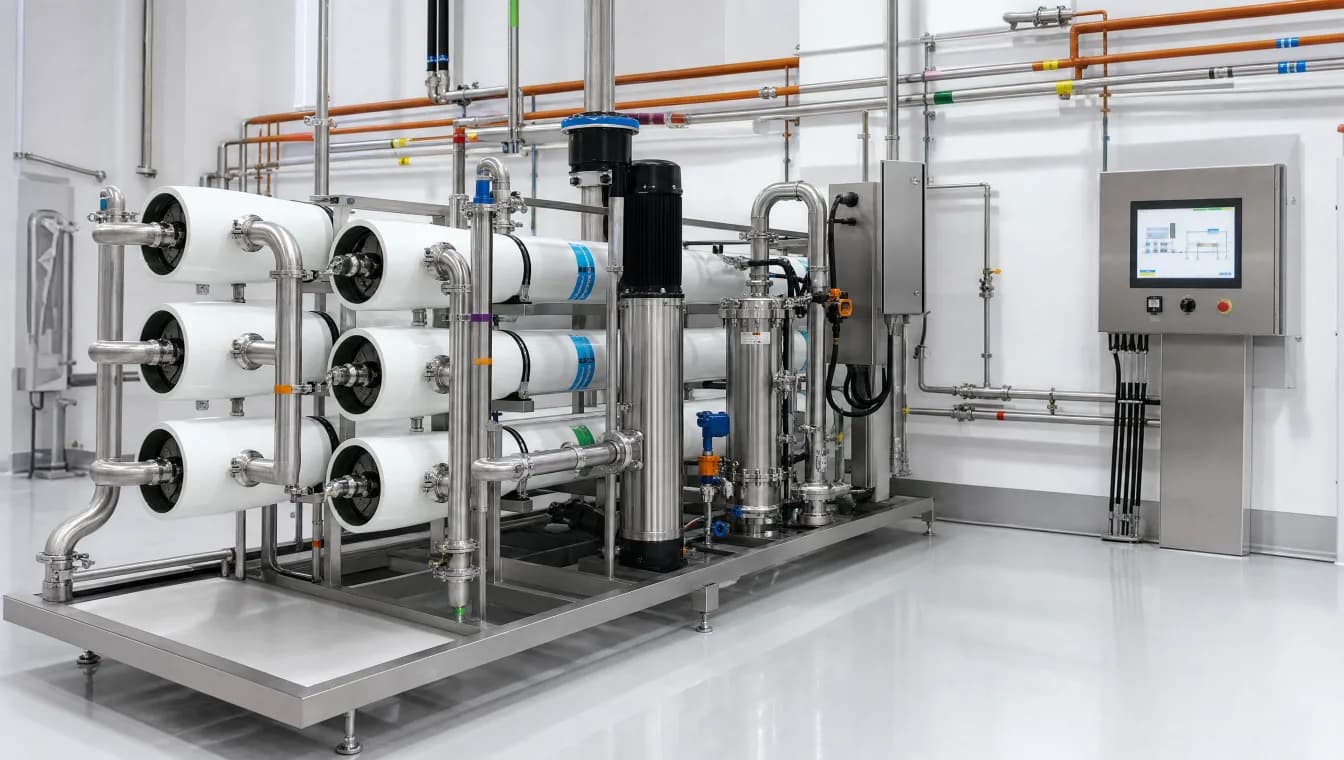
Pharmaceutical effluent is defined less by its strength than by what regulators and municipal plants do not want in it. Active pharmaceutical ingredients pass through conventional biological treatment largely intact, solvents from synthesis and extraction can upset or kill a downstream biomass, and cleaning validation chemistry adds surfactants and sanitizers to every batch changeover. Pharmaceutical wastewater treatment therefore starts with segregation: identifying which streams can go to a conventional plant, which need dedicated pretreatment, and which should never enter the drain at all.
Layered compliance
For Canadian manufacturers, the compliance picture layers municipal sewer bylaws, provincial environmental approvals and, increasingly, customer and parent-company sustainability audits that ask harder questions than the bylaw does. A plant can be legally compliant and still fail a corporate audit over API discharge, which is pushing the sector toward treatment levels beyond the regulatory floor.
Why MBR fits this sector
The technology that fits this sector best is the membrane bioreactor. An MBR combines biological treatment with ultrafiltration in one step, holds a high biomass concentration that resists shock loads, and produces an effluent clean enough for reverse osmosis polishing where API removal or water reuse is the goal. An MBR followed by an industrial reverse osmosis system is the standard answer when a pharmaceutical plant needs to close the loop on process water or meet a discharge target that conventional treatment cannot reach. Upstream of the biology, equalization and pH correction protect the biomass from batch chemistry, and activated carbon or advanced oxidation handles specific recalcitrant compounds where analysis shows they persist.
High-purity reject streams
Sterile and biologics facilities bring their own wrinkle: clean-in-place and water-for-injection systems generate high-purity reject streams that are easy to reuse if they are kept separate from the dirty drains.
Packages and pilots
We supply MBR packages, RO skids, equalization systems and lab-scale pilot units for pharmaceutical and nutraceutical plants. Provide your stream inventory and analytical data, and we will propose a segregation and treatment scheme sized to your batches, with pilot testing before you commit to full scale. Contract manufacturers face a harder version of this problem, because the product mix changes with the customer list, and we design their segregation and treatment schemes with more equalization and more analytical monitoring than a single-product site would need.
An industrial discharger in Montreal answers to two regulators at once. The metropolitan community's By-law 2008-47 governs what the city's sewers will accept, while Quebec's environment ministry (MELCCFP) issues the industrial attestations that direct dischargers to the St. Lawrence must hold. Quebec MELCCFP industrial discharge attestations; CMM By-law 2008-47 governs sewer discharge across the metro. That is the regulatory backdrop for pharmaceutical & Biotech in Montreal: equipment gets sized against the local limits on the route to St. Lawrence River, not against a national average.
Location
Montreal, Quebec
Population 1,763K
Receiving Water
St. Lawrence River
Pricing
Sized & quoted per project
What's Included in Montreal
Sizing against Montreal's sewer-use and surcharge regime (quebec MELCCFP industrial discharge attestations; CMM By-law 2008-47 governs sewer discharge across the metro)
Support for direct-discharge projects requiring a ministerial authorization under section 22 of Quebec's Environment Quality Act
Effluent characterization matched to Montreal's dominant dischargers: aerospace, food & beverage, pharmaceuticals, petrochemicals
Discharge route review for systems releasing toward St. Lawrence River
Pharmaceutical & Biotech on the ground in Montreal
Montreal industrial wastewater lives under a double layer of regulation, CMM By-law 2008-47 for the sewer and MELCCFP attestations for the St. Lawrence, and every compliance file has to stand up in French. In Montreal, the plants asking about pharmaceutical & Biotech are mostly in aerospace, food & beverage, pharmaceuticals and petrochemicals, and each of those sectors puts a different load on a treatment train. Quebec MELCCFP industrial discharge attestations; CMM By-law 2008-47 governs sewer discharge across the metro. Direct discharge toward St. Lawrence River instead requires a ministerial authorization under section 22 of Quebec's Environment Quality Act. A metro of Montreal's size runs enough industrial flow that the municipal plant polices its intake closely, and surcharge invoices arrive on schedule. We quote pharmaceutical & Biotech in Montreal often, and the sizing conversation usually starts from a surcharge bill or a compliance letter rather than from a catalogue.
FAQ
Frequently Asked Questions
Everything you need to know about our services.
Do you supply pharmaceutical & Biotech in Montreal?
Yes. Industrial Wastewater Canada sizes and supplies pharmaceutical & Biotech for plants across Montreal and the surrounding region. Most local demand comes from aerospace, food & beverage, pharmaceuticals, petrochemicals. Send a quote request with your flow rate and effluent type and a sized proposal follows.
What discharge rules apply to industrial wastewater in Montreal?
Quebec MELCCFP industrial discharge attestations; CMM By-law 2008-47 governs sewer discharge across the metro. Aerospace surface-treatment shops, food and beverage plants, pharmaceutical manufacturers and the east-end petrochemical corridor all navigate this double layer. Two regulators, one discharge point The practical consequence is paperwork with teeth: a pretreatment system here has to be documented in French, matched to the attestation's specific parameter list, and able to prove itself with composite sampling rather than grab samples. Plants discharging to the municipal sewer answer to that regime; anything released directly toward St. Lawrence River needs a ministerial authorization under section 22 of Quebec's Environment Quality Act. We size equipment against whichever limit governs your outfall.
How is pharmaceutical & Biotech sized for a plant in Montreal?
From your numbers, not from the city's. We start with measured flow and effluent characterization, then check the result against Montreal's local limits. A processor in a city of 1,763K with aerospace as the dominant sector rarely has the same loading profile as its neighbours, so treatability data drives the selection.
What does pharmaceutical & Biotech cost in Montreal?
There is no list price; every system is sized and quoted per project. The economics are local, though. Aerospace platers worry about chromium and cyanide limits measured in the hundreds of micrograms per litre; a brewery worries about BOD surcharges instead. We build the treatment train around the specific attestation or by-law schedule a plant holds, then set up the sampling and reporting so the compliance file writes itself. Payback in Montreal is usually calculated against those surcharge and compliance costs, and the quote spells that comparison out.
Send the flow rate. Get the system.
Flow, contaminants, discharge limit. An engineer replies with a sized treatment train and a quote — no obligation.
In this city
Equipment available here.
Industrial Wastewater Treatment Systems→Oil Water Separators→Dissolved Air Flotation (DAF) Systems→Membrane Bioreactor (MBR) Systems→MBBR Systems (Moving Bed Biofilm Reactors)→Lamella Clarifiers→Sludge Dewatering Screw Presses→Dewatering Centrifuges→Industrial Reverse Osmosis Systems→Wastewater Evaporators & ZLD Systems→Belt Filter Presses→Coalescing Filters→Industrial Bag & Cartridge Filtration→Food & Beverage Processing→Dairy Processing→Breweries & Distilleries→Meat & Poultry Processing→Pulp & Paper→Pharmaceutical & Biotech→Textile & Dyeing→Mining & Mineral Processing→Oil & Gas / Produced Water→Metal Finishing & Plating→Chemical Manufacturing→Power, Boilers & Cooling Towers→
Nearby cities