Loading...
Wastewater Purification System
Wastewater purification systems that take industrial effluent to reuse quality: MBR, reverse osmosis and polishing stages for Canadian plants.
Key takeaways
Wastewater Purification System: Wastewater purification systems that take industrial effluent to reuse quality: MBR, reverse osmosis and polishing stages for Canadian plants.
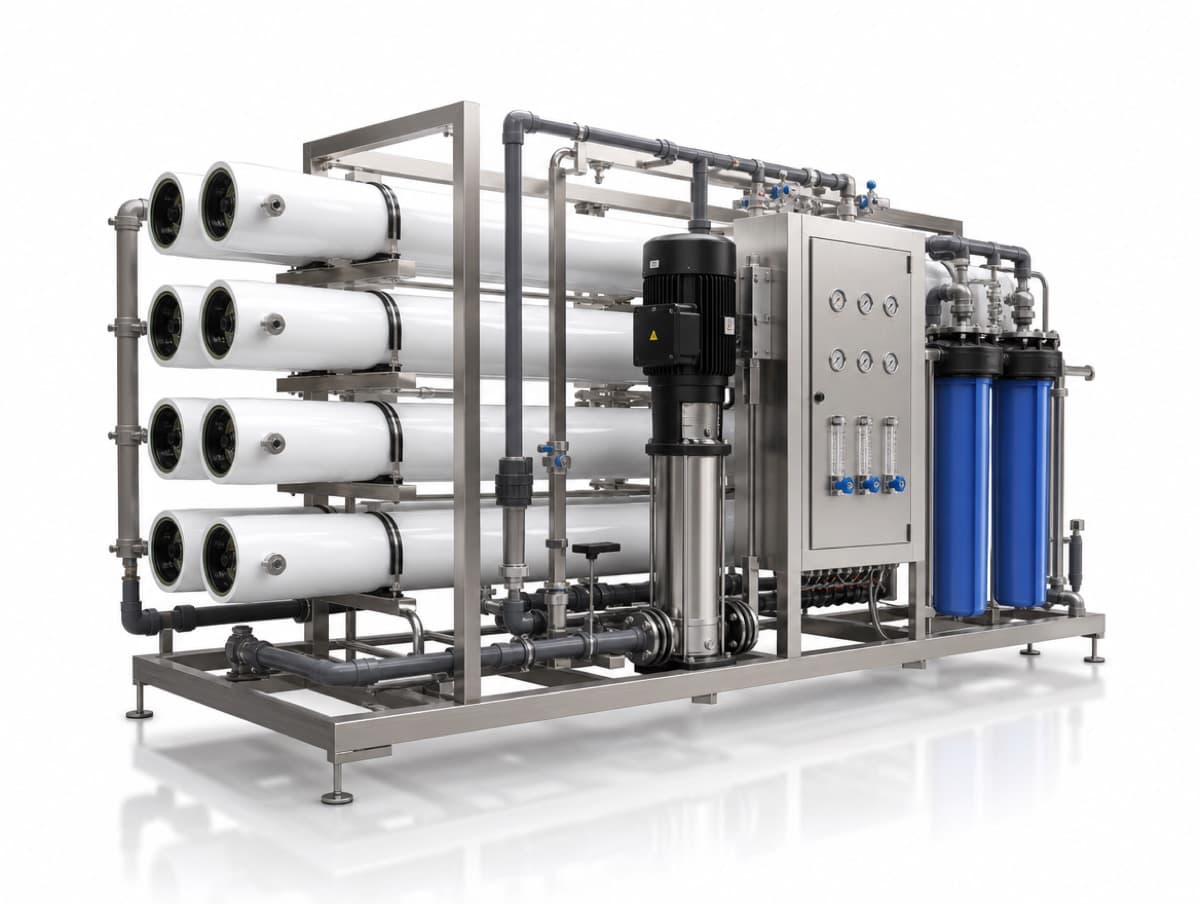
Closest matching equipment: Industrial Reverse Osmosis Systems (By quote)
What a wastewater purification system is sized to do
"Purification" covers a spectrum. At one end, a wastewater purification system takes effluent to sewer-bylaw quality so a plant stops paying surcharges. At the other, it produces water clean enough to discharge to a river under WSER limits, or to reuse inside the process. The right system depends entirely on which of those targets you are buying, because each step of quality adds equipment and cost.
A full purification train reads like a ladder, and you climb only as high as your permit requires:
- Primary: screens, grit removal, equalization
- Physical-chemical: coagulation, flocculation and DAF for solids, oils and phosphorus
- Secondary (biological): MBBR, activated sludge or MBR for dissolved organics and ammonia
- Tertiary and polishing: sand or disc filtration, ultrafiltration, reverse osmosis, UV disinfection
Reuse is the fastest-growing reason Canadian plants climb past step three. Boiler feed, wash-down water and cooling-tower make-up can all run on polished effluent.
Selecting a purification system for industrial effluent
The selection method is unglamorous and reliable. We characterize the raw effluent (flow, BOD, COD, TSS, FOG, ammonia, metals, temperature), fix the finished-water target, then work backwards through the ladder deleting every stage the numbers say you do not need. A membrane bioreactor, for example, merges steps three and four for many streams and saves the footprint of a separate clarifier and filter.
Winter design temperature deserves its own line: biological rates roughly halve for every 10 °C drop, so a system sized on summer data will miss its permit in February.
Tell us the target (bylaw compliance, direct discharge or reuse) and share whatever water data you have. We return a staged process design with a budget price per stage, so you can buy the quality level you need now and leave room to add polishing later.
FAQ
Frequently Asked Questions
Everything you need to know about our services.
Can treated wastewater really be reused in the process?
Yes, for the right uses: rinse water, cooling makeup and boiler feed after RO are common. Potable reuse is a separate regulatory path most industrial sites do not pursue.
What is the difference between purification and treatment?
Treatment brings effluent down to a discharge limit; purification pushes further, toward water clean enough to reuse. The equipment overlaps, but purification usually adds membrane stages such as ultrafiltration and reverse osmosis after conventional treatment.
How much of my wastewater can realistically be recovered?
It depends on the dissolved solids in your effluent and the quality the reuse point needs. Reverse osmosis always produces a concentrate stream that still needs a legal outlet, so recovery is a design decision, not a single number. The water balance in our quote shows both streams.
Send the flow rate. Get the system.
Flow, contaminants, discharge limit. An engineer replies with a sized treatment train and a quote — no obligation.