Loading...
Mine Water Treatment Plant
Mine water treatment plants for Canadian sites: metals precipitation, lamella clarification and sludge dewatering built for remote operation.
Key takeaways
Mine Water Treatment Plant: Mine water treatment plants for Canadian sites: metals precipitation, lamella clarification and sludge dewatering built for remote operation.
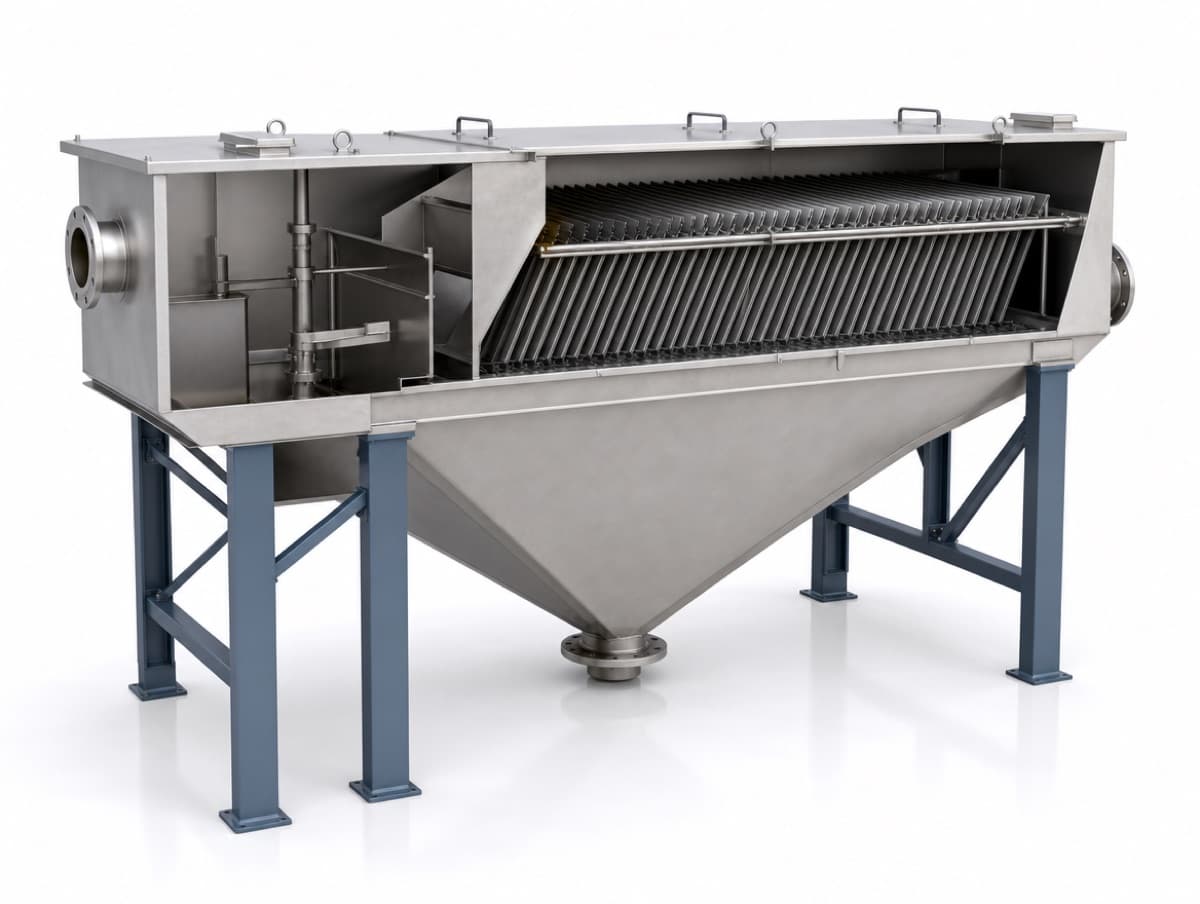
Closest matching equipment: Lamella Clarifiers (By quote)
What a mine water treatment plant has to handle
Mine water is unlike any other industrial effluent. The flows are big, the site is remote, and the chemistry is set by the orebody, not by a process engineer. A mine water treatment plant in Canada typically confronts some mix of dissolved metals (iron, copper, zinc, nickel, arsenic), suspended solids from crushing and haul roads, sulphate, ammonia from blasting residues, and in sulphide deposits, acid mine drainage that can hold pH below 3 for decades after closure.
The workhorse process is lime neutralization with high-density sludge (HDS): lime raises pH into the 9 to 10.5 range where metals precipitate as hydroxides, a clarifier separates the sludge, and recycling part of that sludge back to the reactor densifies it several-fold, cutting disposal volume. Around that core, site chemistry adds stages:
- Sulphate reduction via barium or calcium routes, or biological sulphate-reducing reactors
- Ammonia removal with breakpoint chlorination or nitrifying biology where effluent limits demand it
- Arsenic co-precipitation with ferric iron at controlled pH
- Polishing filtration ahead of discharge to fish-bearing water
Discharge is federally regulated: the Metal and Diamond Mining Effluent Regulations under the Fisheries Act set metal limits and require acute-lethality testing on rainbow trout, the same toxicity benchmark the broader WSER framework uses.
Treatment plants for remote Canadian mine sites
Remote logistics shape the design as much as chemistry does. We package mine water plants as containerized and skid-mounted modules that travel by road or barge, commission quickly inside the short northern construction window, and run unattended between operator rotations, with reagent storage sized to the resupply schedule rather than to a southern delivery cadence.
Closure planning matters too: a plant built for operations should have a credible path to passive or semi-passive treatment after the mill stops.
Send your water balance and assay data, or the effluent quality requirements from your permit. We will develop the flowsheet, size the plant for freshet peaks, and quote modules through to full installations.
Read more about mine water treatment applications, the lamella clarifiers at the heart of most trains, and request a quote with your water chemistry.
FAQ
Frequently Asked Questions
Everything you need to know about our services.
What regulations govern mine water discharge in Canada?
The federal Metal and Diamond Mining Effluent Regulations set baseline limits, and each province layers its own permit conditions on top. The plant is sized against whichever limit is tightest.
Can a mine water treatment plant run at a remote site without full-time staff?
Yes. Remote plants run on PLC control with satellite or cellular telemetry, and site visits follow the sampling schedule in the permit rather than a daily shift. The design accounts for freeze protection and reagent storage between visits.
What happens to the sludge from lime treatment?
Metal hydroxide sludge is thickened, dewatered and managed on site, most often in a lined storage facility covered by the mine permit. Dewatering equipment is sized with the plant because hauling wet sludge from a remote site is the expensive alternative.
Send the flow rate. Get the system.
Flow, contaminants, discharge limit. An engineer replies with a sized treatment train and a quote — no obligation.