Loading...
Oil Water Separators in Kingston, Ontario
Industrial Wastewater Canada sizes and supplies oil water separators for plants in Kingston, Ontario. Local demand is driven by food processing, chemicals, institutions, manufacturing, discharging under Kingston's sewer-use rules toward Lake Ontario / St. Lawrence. Quote requests with flow rate and effluent type get a sized proposal.
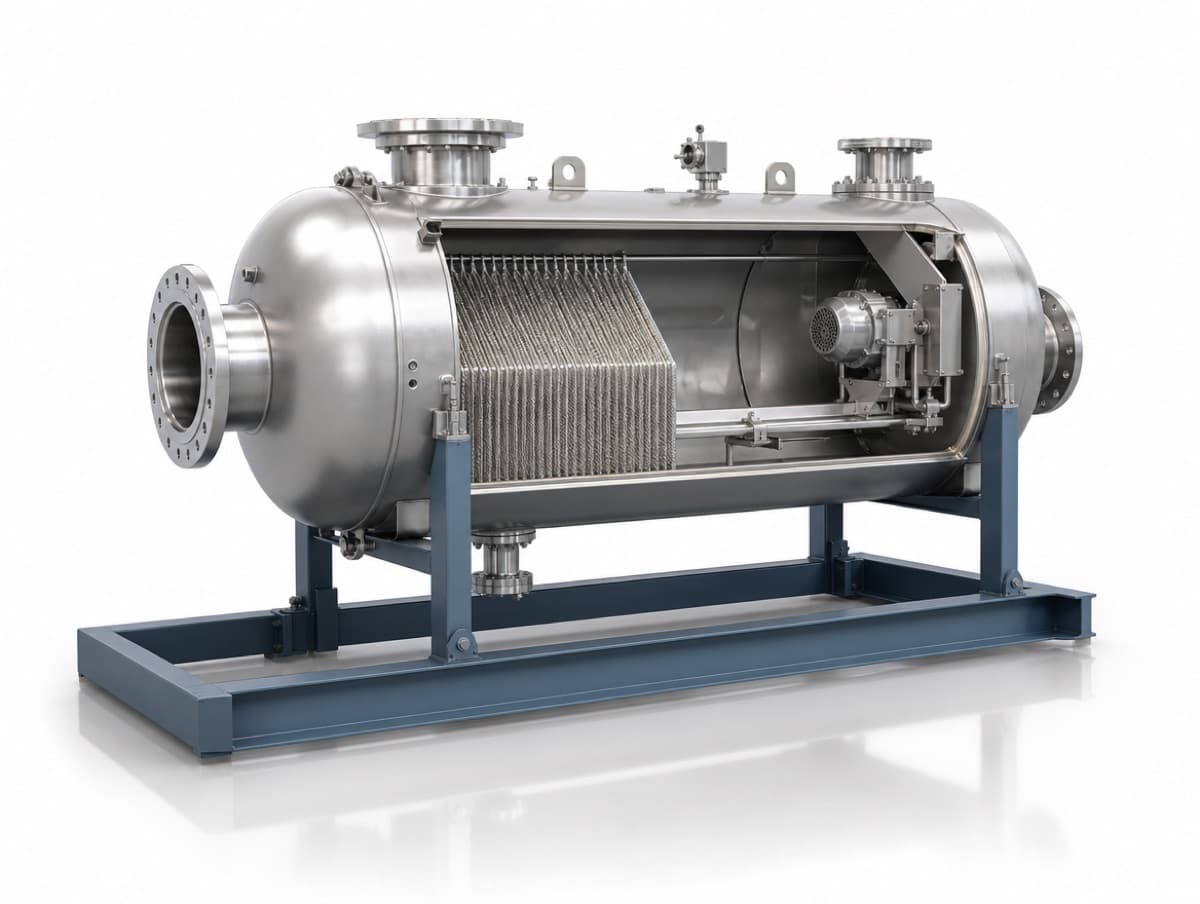
Every vehicle wash bay, machine shop, fuel depot and refinery in Canada faces the same line item in its sewer-use bylaw: oil and grease, typically capped somewhere between 15 and 100 mg/L depending on the municipality. An oil water separator is the standard way to meet that cap. It exploits the density difference between oil and water: flow slows inside the vessel, droplets rise and coalesce into a surface layer that gets skimmed, and cleaned water leaves from below.
Two designs, one choice
The choice that matters is between the two main designs. A gravity API separator is a long rectangular basin sized to Stokes' law, built to let droplets of roughly 150 microns and larger rise out. It is robust, tolerant of solids and easy to maintain, which is why refineries still standardize on it. A coalescing-plate separator adds inclined plate packs or oleophilic media that intercept far smaller droplets, down to about 20 to 60 microns, so it reaches better effluent quality in a fraction of the footprint. Our coalescing configurations hold effluent under 10 ppm oil and grease in free-oil service, and many sites pair an API basin with a coalescing polishing stage.
Above-grade, below-grade and API 421
We quote both, in above-grade and below-grade tanks, with API 421 compliant configurations where the specification calls for it. Options include oil-stop valves that close automatically when the oil layer reaches capacity, high-level alarms, and sludge baffles for streams that carry grit. What a separator will not do is remove chemically emulsified or dissolved oil; if your stream carries surfactants from a wash process, we will tell you plainly that you need chemical treatment or flotation ahead of the separator, because selling you a tank that cannot meet your limit helps neither of us.
Sizing from your real flows
Sizing depends on flow rate, droplet size distribution and oil type, which is why the search term oil water separator, at 480 searches a month in Canada, so often ends in a mis-sized purchase from a catalogue. Send us your flow, a recent lab analysis or a description of the process, and your discharge destination. We return a sized configuration, budget price and delivery timeline, reviewed by a process engineer before it reaches you, for any site in Canada. Installation support and commissioning are quoted per project, and replacement plate packs and media remain available for the life of the vessel. Below-grade installations ship with traffic-rated covers where the separator sits in a drive lane, and we keep skimmer parts and alarm components on the shelf so a maintenance call does not become a compliance gap.
Kingston's industrial wastewater market blends manufacturing with institutions. Food processors, chemical plants and fabricators share the city of 132,000 with Queen's University, a regional hospital network, correctional facilities and military installations, each institution running labs, kitchens and utilities that discharge like small industries. Treated flows reach Lake Ontario where it narrows into the St. Eastern Ontario manufacturing and institutional market. That is the regulatory backdrop for oil Water Separators in Kingston: equipment gets sized against the local limits on the route to Lake Ontario / St. Lawrence, not against a national average.
Location
Kingston, Ontario
Population 132K
Receiving Water
Lake Ontario / St. Lawrence
Pricing
Sized & quoted per project
What's Included in Kingston
Sizing against Kingston's sewer-use and surcharge regime (eastern Ontario manufacturing and institutional market)
Support for direct-discharge projects requiring an Environmental Compliance Approval from Ontario's Ministry of the Environment, Conservation and Parks
Effluent characterization matched to Kingston's dominant dischargers: food processing, chemicals, institutions, manufacturing
Discharge route review for systems releasing toward Lake Ontario / St. Lawrence
Oil Water Separators on the ground in Kingston
Kingston's universities, hospitals and correctional facilities discharge like small factories, making institutional wastewater a market segment of its own at the outlet of the Great Lakes. In Kingston, the plants asking about oil Water Separators are mostly in food processing, chemicals, institutions and manufacturing, and each of those sectors puts a different load on a treatment train. Eastern Ontario manufacturing and institutional market. Direct discharge toward Lake Ontario / St. Lawrence instead requires an Environmental Compliance Approval from Ontario's Ministry of the Environment, Conservation and Parks. Kingston's municipal plant has limited spare capacity, so a single overloaded industrial connection shows up quickly in its intake numbers. Projects in Kingston tend to be one-of-a-kind rather than repeat configurations, which is exactly the case where sizing from measured effluent data matters most.
FAQ
Frequently Asked Questions
Everything you need to know about our services.
Do you supply oil Water Separators in Kingston?
Yes. Industrial Wastewater Canada sizes and supplies oil Water Separators for plants across Kingston and the surrounding region. Most local demand comes from food processing, chemicals, institutions, manufacturing. Send a quote request with your flow rate and effluent type and a sized proposal follows.
What discharge rules apply to industrial wastewater in Kingston?
Eastern Ontario manufacturing and institutional market. Lawrence, the outlet of the entire Great Lakes system. Institutions discharge like factories here A hospital sterilization department, a university chemistry building and a correctional facility's laundry each produce streams that trip sewer by-law parameters, solvents, silver, high-temperature caustic water, without any of them thinking of itself as an industrial discharger. Plants discharging to the municipal sewer answer to that regime; anything released directly toward Lake Ontario / St. Lawrence needs an Environmental Compliance Approval from Ontario's Ministry of the Environment, Conservation and Parks. We size equipment against whichever limit governs your outfall.
How is oil Water Separators sized for a plant in Kingston?
From your numbers, not from the city's. We start with measured flow and effluent characterization, then check the result against Kingston's local limits. A processor in a city of 132K with food processing as the dominant sector rarely has the same loading profile as its neighbours, so treatability data drives the selection.
What does oil Water Separators cost in Kingston?
There is no list price; every system is sized and quoted per project. The economics are local, though. Kingston's concentration of such institutions makes them a real market segment: small flows, complicated ownership, procurement by public tender. The conventional industrial base needs conventional answers, BOD reduction for food plants, containment and neutralization for chemicals, delivered with attention to the city's position at the Great Lakes outlet, where a discharge exceedance carries symbolic weight beyond its mass loading. Payback in Kingston is usually calculated against those surcharge and compliance costs, and the quote spells that comparison out.
Send the flow rate. Get the system.
Flow, contaminants, discharge limit. An engineer replies with a sized treatment train and a quote — no obligation.
In this city
Equipment available here.
Industrial Wastewater Treatment Systems→Oil Water Separators→Dissolved Air Flotation (DAF) Systems→Membrane Bioreactor (MBR) Systems→MBBR Systems (Moving Bed Biofilm Reactors)→Lamella Clarifiers→Sludge Dewatering Screw Presses→Dewatering Centrifuges→Industrial Reverse Osmosis Systems→Wastewater Evaporators & ZLD Systems→Belt Filter Presses→Coalescing Filters→Industrial Bag & Cartridge Filtration→Food & Beverage Processing→Dairy Processing→Breweries & Distilleries→Meat & Poultry Processing→Pulp & Paper→Pharmaceutical & Biotech→Textile & Dyeing→Mining & Mineral Processing→Oil & Gas / Produced Water→Metal Finishing & Plating→Chemical Manufacturing→Power, Boilers & Cooling Towers→
Nearby cities