Loading...
Industrial wastewater treatment equipment in New Brunswick
Serving 3 cities across New Brunswick.
3
Cities Served
0.0M+
Population Covered
Same-Day
Delivery Available
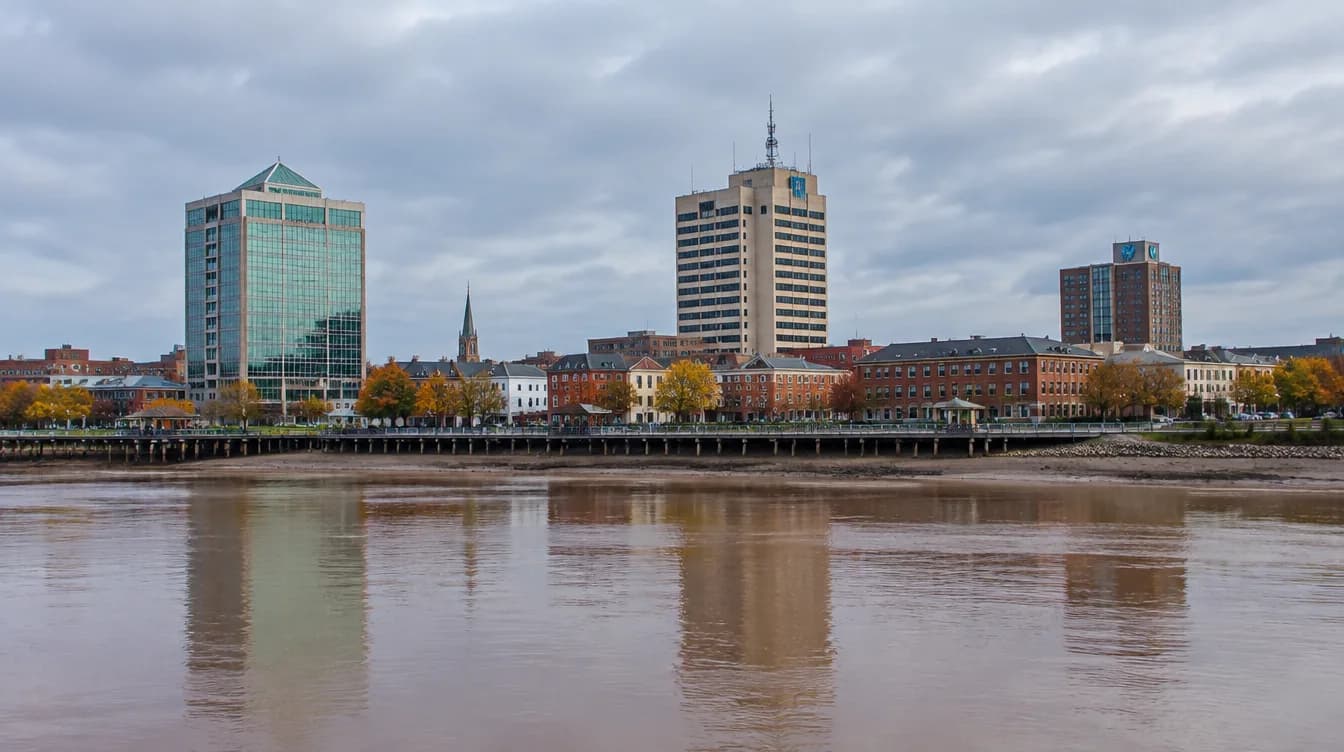
Industrial wastewater treatment equipment Services in New Brunswick
Industrial Wastewater Canada provides industrial wastewater treatment equipment across 3 cities in New Brunswick. Whether you're in Moncton, Saint John, or Fredericton, we size, supply and commission systems against your local discharge limits.
Discharge rules vary city by city in New Brunswick
Every municipality in New Brunswick writes its own sewer-use bylaw, and the surcharge math changes with it. Here is what drives pretreatment decisions in the cities we serve most.
Moncton
Discharges to Petitcodiac RiverMoncton's wastewater flows toward a recovering tidal-bore estuary under TransAqua's surcharge program, in a market where genuinely bilingual operator training is a competitive edge.
Saint John
Discharges to Bay of FundySaint John pairs Canada's largest refinery and Fundy's 12-metre tides, refinery-scale wastewater in a marine environment regulators treat as non-negotiable.
Fredericton
Discharges to Saint John RiverFredericton hosts the DELG offices where New Brunswick's discharge approvals are decided, so knowing what a complete application looks like is worth weeks on any wastewater project here.
All Cities in New Brunswick
FAQ
Frequently Asked Questions
Everything you need to know about our services.
Which New Brunswick cities do you cover?
We publish local discharge context for Moncton, Saint John and Fredericton, and quote anywhere else in New Brunswick on the same terms — the province is inside our service area, not just these markets.
What regulates industrial effluent in New Brunswick?
Two layers, always: the municipal sewer-use by-law where you discharge to a sewer, and the provincial permit or authorization where effluent reaches a watercourse. In the markets we cover here, that means Maritimes distribution hub; TransAqua sewer surcharge program. Federal Fisheries Act provisions apply the moment effluent reaches fish-bearing water.
Where does treated effluent go in New Brunswick?
Municipal plants in the New Brunswick markets we cover discharge to Petitcodiac River, Bay of Fundy and Saint John River. The assimilative capacity of the receiving water is the single best predictor of how tight your local limits will be.
Can you quote a site in New Brunswick with no municipal sewer?
Yes. Remote sites, camps and rural plants are quoted as self-contained packages — containerized or skid-mounted, built for unattended winter operation — and discharge to a provincial authorization or to reuse rather than to a sewer.
Send the flow rate. Get the system.
Flow, contaminants, discharge limit. An engineer replies with a sized treatment train and a quote — no obligation.