Loading...
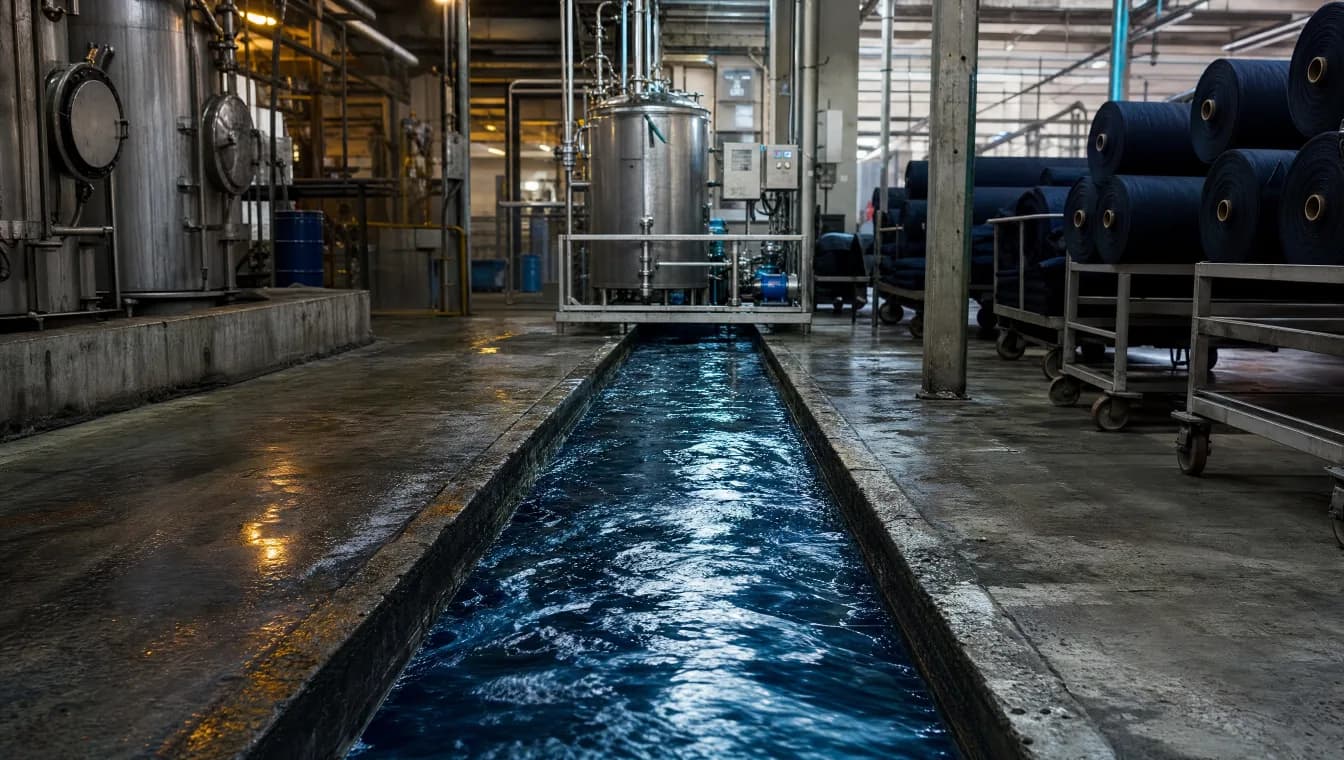
Industrial wastewater treatment equipment for Textile & Dyeing
Colour removal via DAF and coagulation · Membrane polishing for reuse · COD reduction to bylaw limits
Why Textile & Dyeing Chooses Industrial Wastewater Canada
Colour is the contaminant that gets textile plants in trouble first. A dyehouse can meet every numeric limit in its sewer agreement and still draw a complaint because the discharge is visibly blue, and most synthetic dyes resist the biological treatment that municipal plants rely on. Textile wastewater treatment in Canada is therefore built around two jobs that ordinary treatment does poorly: removing colour, and dealing with the salt, surfactants and sizing agents that dyeing and finishing chemistry leaves behind.
A smaller, more specialized sector
The Canadian sector today is smaller than it once was but more specialized. Technical textile makers, commercial dyers and finishers, carpet and nonwoven producers, and industrial laundries all generate the same family of effluent: warm, coloured, alkaline, loaded with surfactants and with COD that outruns its BOD because so much of the organic load is synthetic. That COD-to-BOD gap is the tell that biological treatment alone will not finish the job.
Screening, equalization, then colour removal
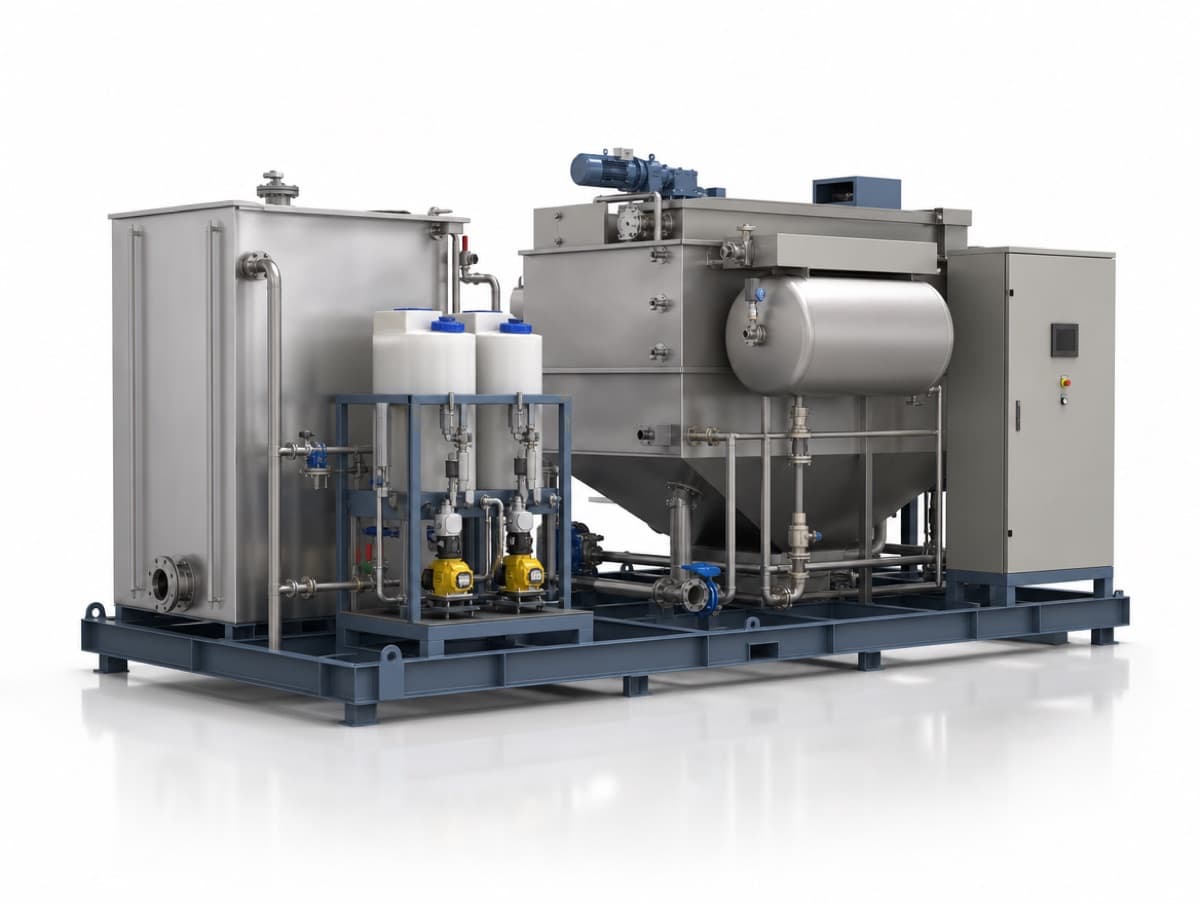
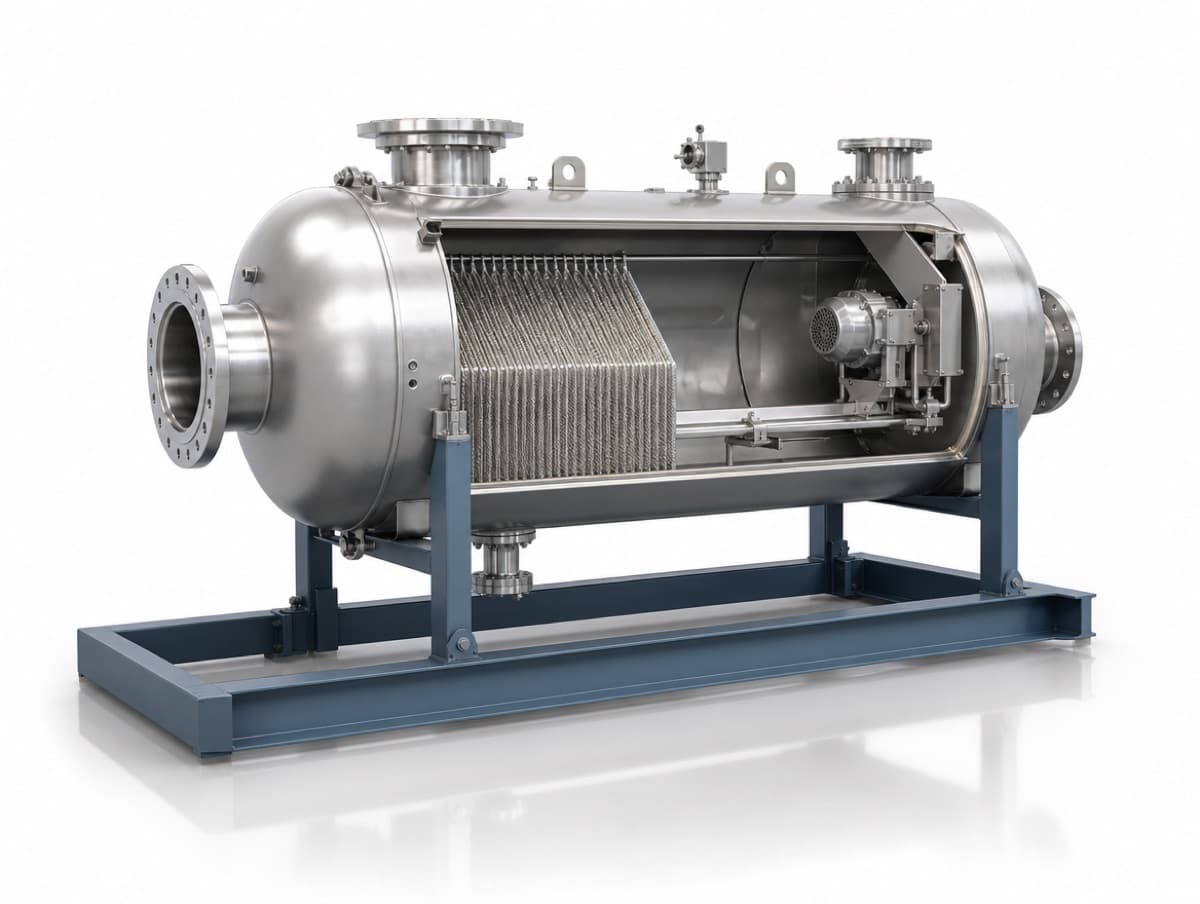
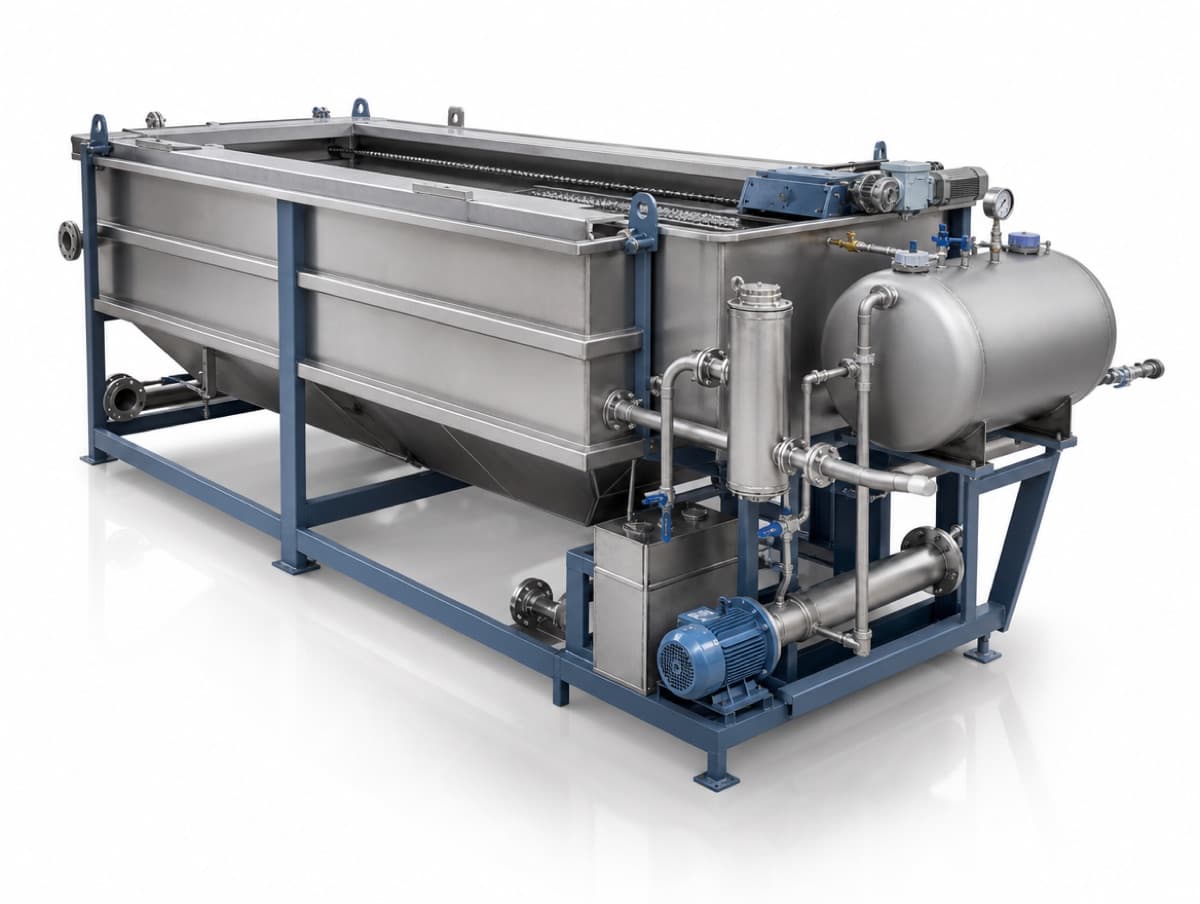
An effective train starts with screening for lint and fibre, then equalization, because dye batches arrive as slugs of a single concentrated colour. Chemical coagulation and flocculation follow, breaking the dye dispersion so a lamella clarifier or a dissolved air flotation unit can pull the solids out. This physicochemical stage removes most colour and a large share of COD. Where discharge limits are tighter, or where the plant wants to reuse water, an MBBR handles the biodegradable fraction and an industrial reverse osmosis system polishes the effluent to reuse quality. RO matters more in this sector than most, because dyeing consumes large volumes of heated, softened water that is expensive to buy and heat once and wasteful to buy and heat twice.
Dewatering the gelatinous sludge
Sludge from coagulation is voluminous and gelatinous, so we size the dewatering stage honestly: a screw press or belt filter press with polymer conditioning, selected from a jar test on your actual sludge rather than a table.
Send us a litre
Send us a litre of your worst effluent and your discharge limits. We will run the jar tests, then quote the chemistry, the clarifier and the polishing stages from results, not assumptions. Industrial laundries deserve a note of their own: their effluent adds lint, oil and heavy metals from wiped parts to the standard surfactant load, and heat recovery from the hot discharge often pays back faster than any treatment stage.
| Sector | Textile & Dyeing |
|---|---|
| Common applications | Colour removal via DAF and coagulation · Membrane polishing for reuse · COD reduction to bylaw limits |
| Service area | Canada |
Key takeaways
- Colour removal via DAF and coagulation
- Membrane polishing for reuse
- COD reduction to bylaw limits
Textile & Dyeing Wastewater Treatment Use Cases
Colour removal via DAF and coagulation
Membrane polishing for reuse
COD reduction to bylaw limits
FAQ
Frequently Asked Questions
Everything you need to know about our services.
What makes Textile & Dyeing wastewater difficult to treat?
Colour is the contaminant that gets textile plants in trouble first. A dyehouse can meet every numeric limit in its sewer agreement and still draw a complaint because the discharge is visibly blue, and most synthetic dyes resist the biological treatment that municipal plants rely on.
Which treatment steps apply in Textile & Dyeing plants?
The applications we are asked for most often in this sector: Colour removal via DAF and coagulation, Membrane polishing for reuse and COD reduction to bylaw limits. The actual train is assembled from your effluent characterization, not from a sector template.
What do you need to quote a Textile & Dyeing project?
Three things: your flow rate, a recent lab analysis or a plain description of the process generating the water, and where the effluent goes (municipal sewer, provincial permit or reuse). With those we return a sized configuration, budget price and delivery timeline.
Do you serve Textile & Dyeing sites outside major cities?
Yes. We cover Canada, including remote sites with no municipal sewer connection, where containerized or skid-mounted packages are usually the right answer.
Send the flow rate. Get the system.
Flow, contaminants, discharge limit. An engineer replies with a sized treatment train and a quote — no obligation.