Loading...
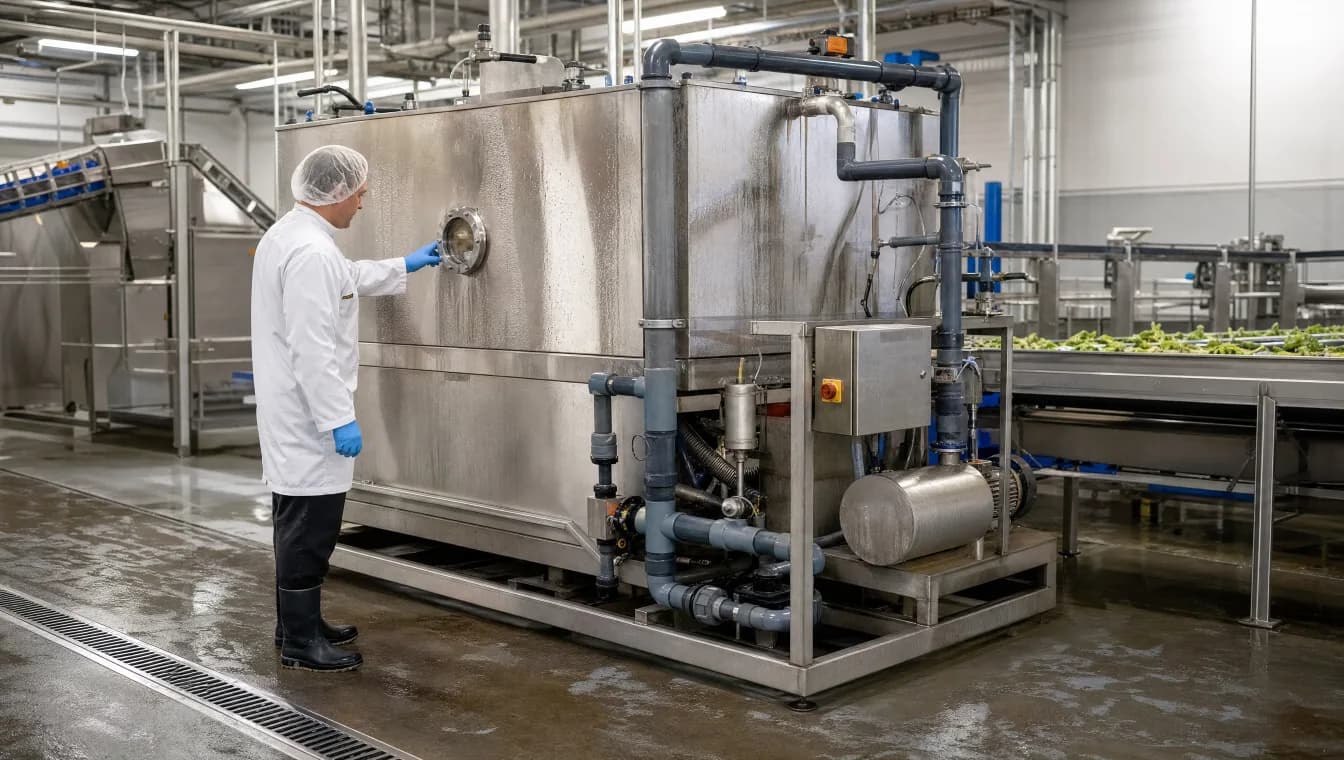
Industrial wastewater treatment equipment for Food & Beverage Processing
DAF pretreatment for FOG and TSS removal · Surcharge reduction before municipal discharge · Wash-down water screening and equalization
Why Food & Beverage Processing Chooses Industrial Wastewater Canada
Food and beverage plants produce some of the hardest effluent in Canadian industry. Wash-down water carries fats, oils and grease from fryers and cookers. Blanching and cutting lines add suspended solids. Sugars, starches and proteins push BOD far above what a municipal sewer bylaw allows. A vegetable cannery and a snack-food plant can sit in the same industrial park and send completely different effluent to the same interceptor, which is why food processing wastewater treatment starts with a characterization of your actual discharge, not a catalogue number.
Two directions of regulatory pressure
The regulatory pressure comes from two directions. Municipal sewer-use bylaws in cities like Toronto, Calgary and Montreal set limits on FOG, BOD, TSS and pH, and charge overstrength surcharges when you exceed them. Provincial permits and the federal Fisheries Act apply the moment any effluent reaches a watercourse. For most food processors the surcharge line item is the first thing that gets management's attention: a plant paying tens of thousands of dollars a year in overstrength fees can often recover the cost of a DAF system within a few operating seasons.
A typical treatment train
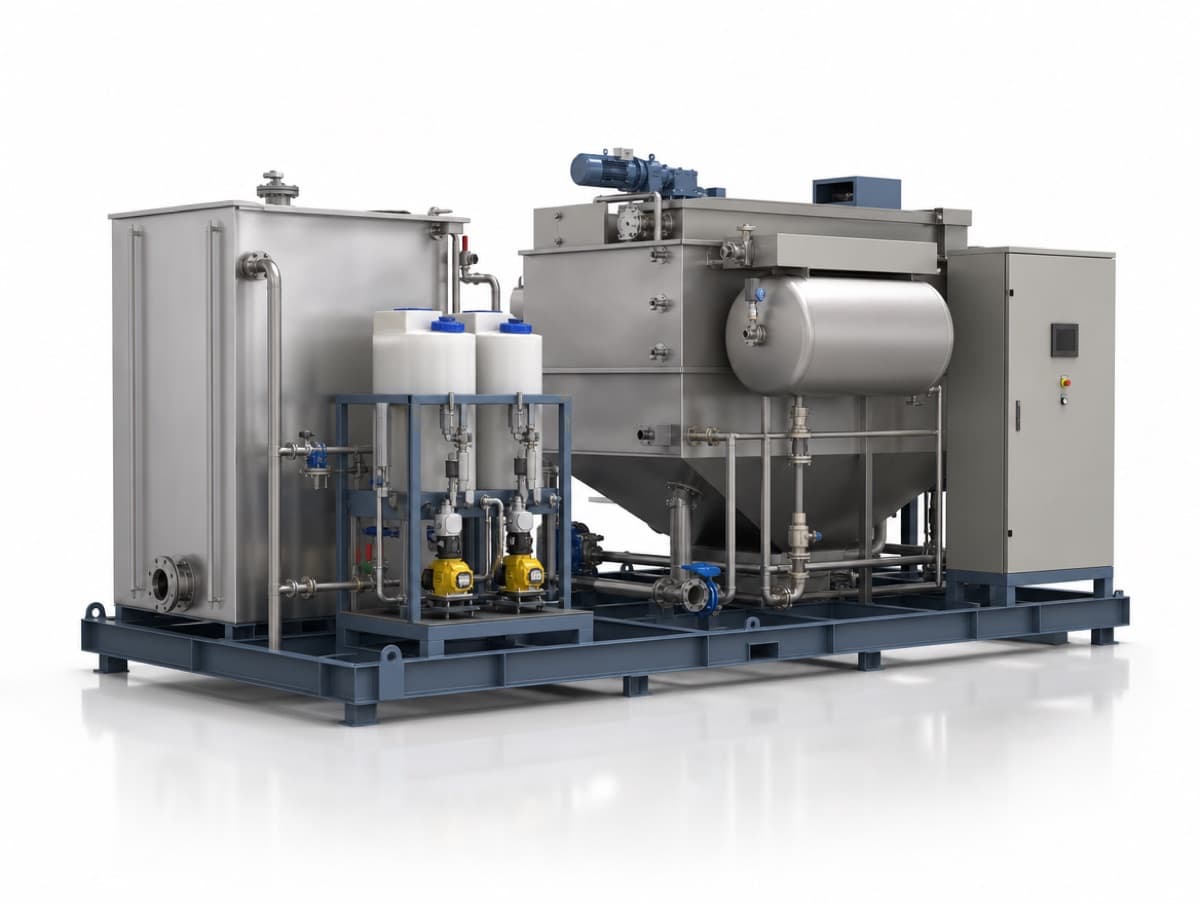
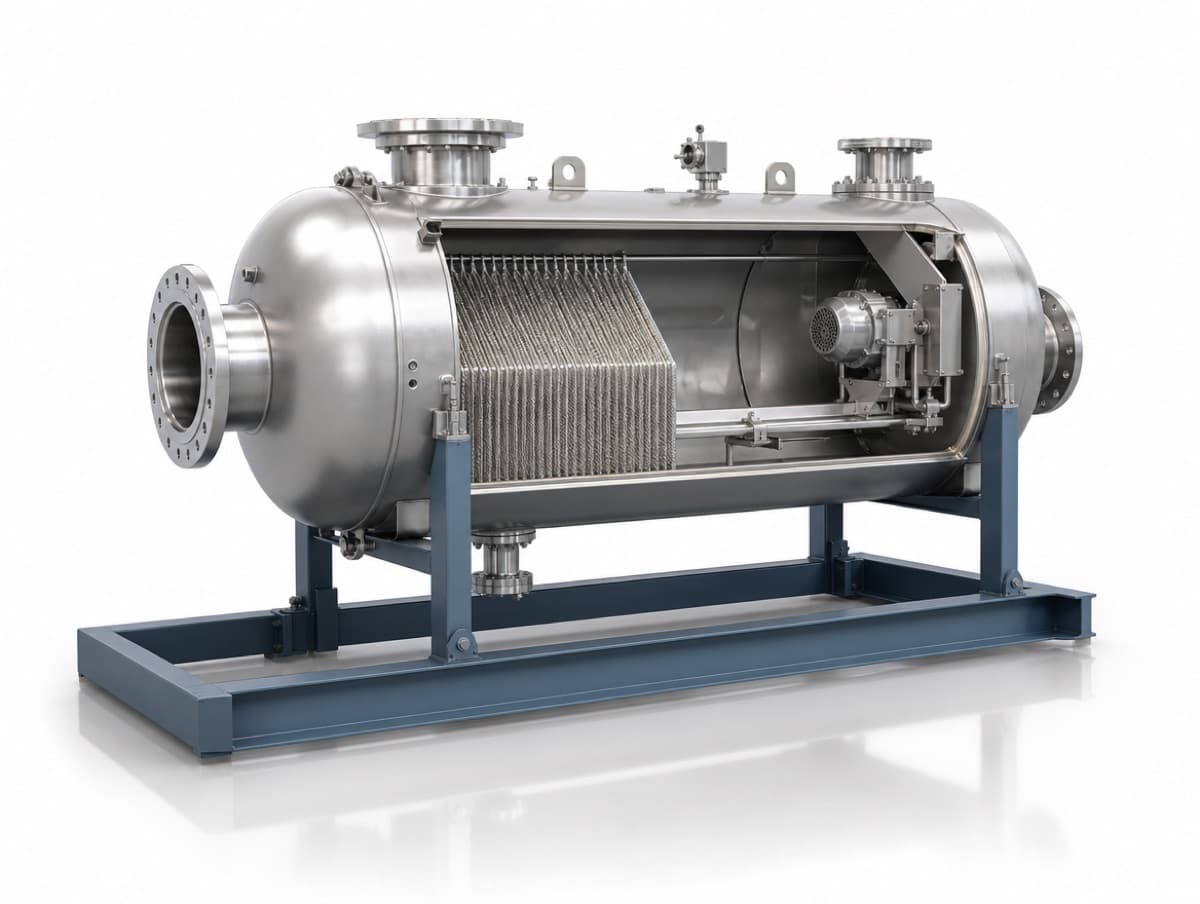
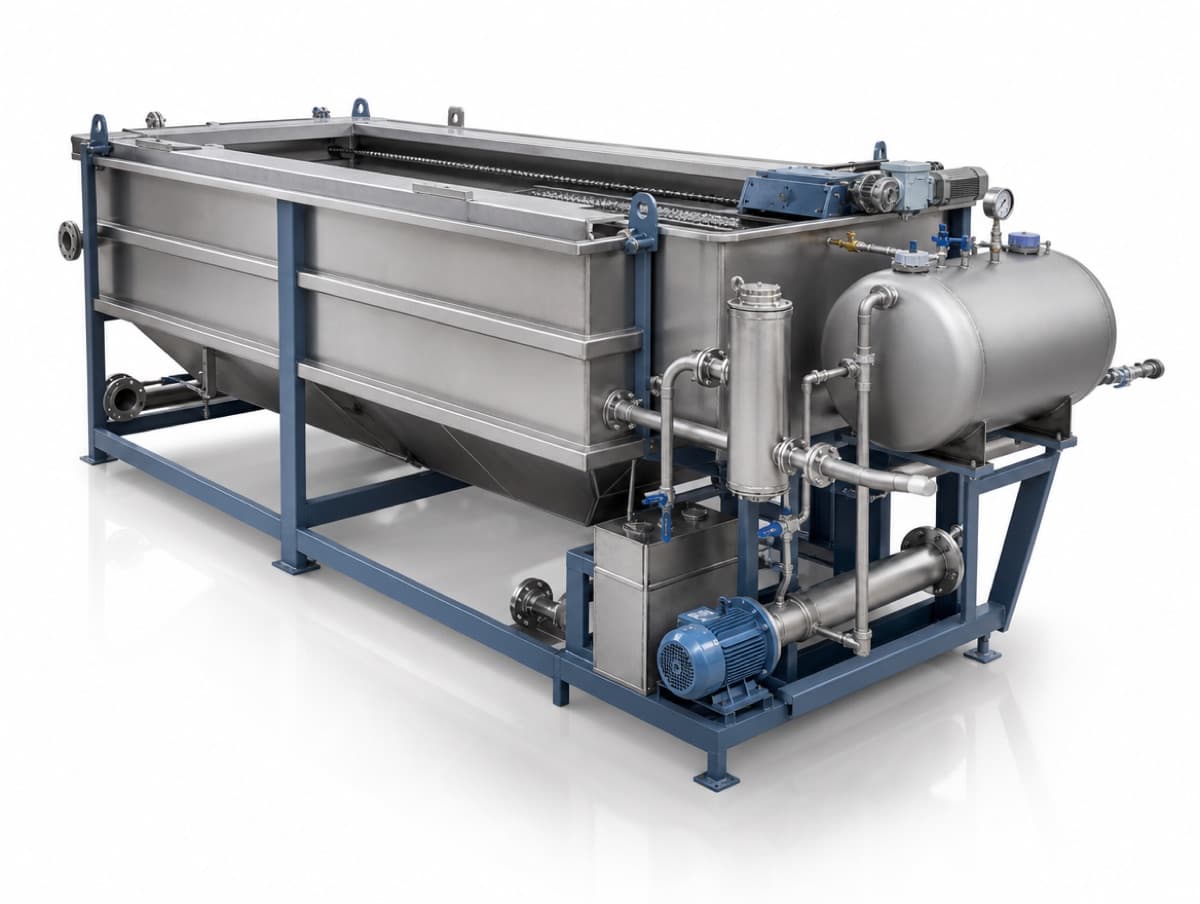
A typical treatment train for this sector begins with rotary screening to pull out solids and peel fragments, followed by an equalization tank to flatten the swings between production and clean-in-place cycles. Dissolved air flotation with coagulant and flocculant dosing then removes FOG and fine solids. Where a receiving sewer cannot accept the remaining BOD, an MBBR or anaerobic stage polishes the effluent, and the recovered sludge goes to a screw press for dewatering before disposal or land application.
Sized from your flow data
We size each stage from your flow data and a composite sample. Send us your daily volume, your discharge permit or bylaw limits, and a recent lab analysis, and we return a scoped proposal with equipment selections, footprint and budget. Because we supply the equipment rather than operate the plant, the proposal is built around what your effluent needs, whether that is a single screen or a containerized package plant delivered to a plant in rural Ontario or coastal British Columbia. Seasonal packers deserve one extra note: a plant that runs hard for twelve weeks a year should not carry the capital cost of a system sized for year-round flow, and rental or staged equipment often fits that operating pattern better than a permanent build.
| Sector | Food & Beverage Processing |
|---|---|
| Common applications | DAF pretreatment for FOG and TSS removal · Surcharge reduction before municipal discharge · Wash-down water screening and equalization |
| Service area | Canada |
Key takeaways
- DAF pretreatment for FOG and TSS removal
- Surcharge reduction before municipal discharge
- Wash-down water screening and equalization
Food & Beverage Processing Wastewater Treatment Use Cases
DAF pretreatment for FOG and TSS removal
Surcharge reduction before municipal discharge
Wash-down water screening and equalization
FAQ
Frequently Asked Questions
Everything you need to know about our services.
What makes Food & Beverage Processing wastewater difficult to treat?
Food and beverage plants produce some of the hardest effluent in Canadian industry. Wash-down water carries fats, oils and grease from fryers and cookers. Blanching and cutting lines add suspended solids. Sugars, starches and proteins push BOD far above what a municipal sewer bylaw allows.
Which treatment steps apply in Food & Beverage Processing plants?
The applications we are asked for most often in this sector: DAF pretreatment for FOG and TSS removal, Surcharge reduction before municipal discharge and Wash-down water screening and equalization. The actual train is assembled from your effluent characterization, not from a sector template.
What do you need to quote a Food & Beverage Processing project?
Three things: your flow rate, a recent lab analysis or a plain description of the process generating the water, and where the effluent goes (municipal sewer, provincial permit or reuse). With those we return a sized configuration, budget price and delivery timeline.
Do you serve Food & Beverage Processing sites outside major cities?
Yes. We cover Canada, including remote sites with no municipal sewer connection, where containerized or skid-mounted packages are usually the right answer.
Send the flow rate. Get the system.
Flow, contaminants, discharge limit. An engineer replies with a sized treatment train and a quote — no obligation.